Traditional Chinese Crafts
Browse Chinese intangible cultural heritage guides about lacquer, silk, embroidery, paper, printing, architecture, ceramics, timber craft, shipbuilding, and other handmade knowledge.
Chinese Intangible Cultural Heritage
Explore China's living craft, performance, food, festival, and folk traditions through clear English guides to materials, process, region, and cultural meaning.
Topic Hubs
These hub pages strengthen the path from the homepage to individual guides, so readers and search engines can understand the site's craft, performance, ritual, knowledge, oral tradition, and regional clusters.
Browse Chinese intangible cultural heritage guides about lacquer, silk, embroidery, paper, printing, architecture, ceramics, timber craft, shipbuilding, and other handmade knowledge.
Browse guides to Chinese opera, folk song, choral music, instrumental music, dance, puppet theatre, and ritual performance traditions.
Browse Chinese heritage guides about festivals, social customs, folk belief, seasonal practice, maritime ritual, and community ceremony.
Browse guides to acupuncture, moxibustion, Tibetan medicinal bathing, tea knowledge, seasonal calendars, mathematics, writing, and other living knowledge systems.
Browse Chinese heritage guides about oral epics, sung storytelling, folk songs, language memory, community teaching, and narrative performance.
Browse guides organized by regional and ethnic community context, including Dong, Tibetan, Uyghur, Mongolian, Qiang, Li, Hezhen, Korean, Kirgiz, Minnan, and other traditions.
Featured Heritage Guides
Living Heritage China explains Chinese intangible cultural heritage for overseas readers. Each guide names the tradition in English and Chinese when useful, then explains region, materials, tools, process, uses, cultural meaning, and how the practice continues today.
The guide library now connects traditional craftsmanship with folk art, tea culture, writing arts, festivals, medicine, martial arts, music, folk belief, papermaking, printing, architecture, textile arts, music, oral epics, festivals, medicine, seasonal knowledge, mathematics, maritime ritual, shipbuilding, printing craft, architecture, and performing arts, so the homepage works as a broader Chinese heritage hub rather than a single craft story.
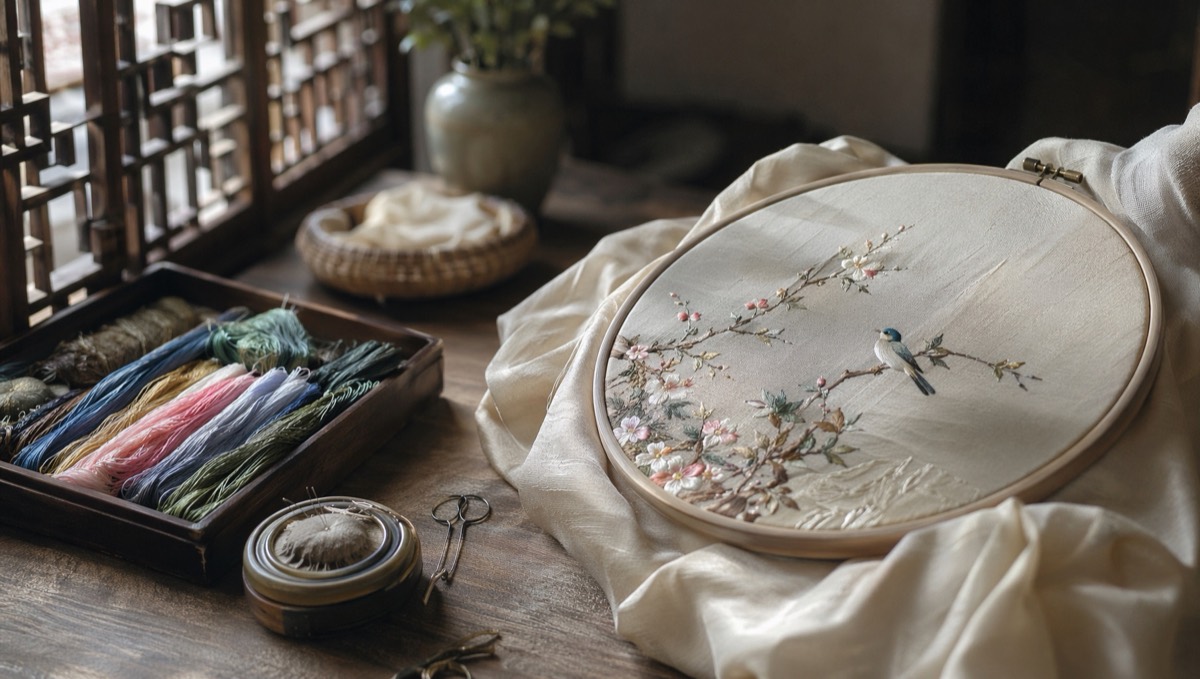
Silk thread, fine stitches, flower-and-bird motifs, and the patient image-making of Sichuan embroidery.
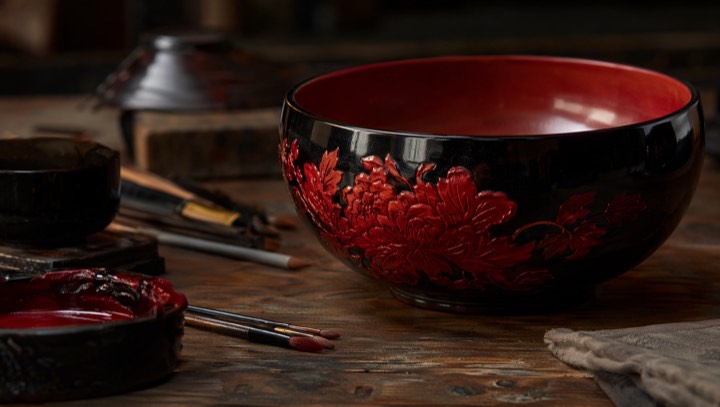
Natural lacquer, layered curing, polished surfaces, carving, painting, and inlay in Chinese craft heritage.
Red paper, scissors, engraving knives, windows, festival symbols, and regional folk patterns.
Tea picking, manual processing, six tea categories, hospitality, tea houses, and shared identity.
Singing, reciting, acting, martial arts, music, costume, facial makeup, and symbolic performance.
Brush control, ink, paper, script styles, training practice, expressive line, and writing art heritage.
Needles, moxa, mugwort heat, meridian theory, training, clinical safety, and living medicine heritage.
Dragon boat racing, drums, paddles, zongzi, summer protection customs, and community memory.
Carved puppets, rods, lit screens, music, oral storytelling, regional troupes, and theatre craft.
Silk weaving, gold-toned thread, complex looms, pattern design, and luminous brocade craft.
Explore Taijiquan through relaxed circular movement, breath regulation, five steps, eight techniques, pushing hands, Henan origins, and living martial arts heritage.
Understand guqin music through the seven-string zither, finger technique, notation, solo practice, literati culture, qin schools, and living musical transmission.
Explore Kunqu opera through Kunshan origins, Suzhou theatre, kunqiang melody, singing, recitation, symbolic gestures, costume, music, and living performance.
Explore Chinese seal engraving through stone, knives, reverse carving, red seal paste, calligraphy, Xiling seal culture, and living square-inch art.
Explore Mazu belief and customs through Meizhou Island origins, coastal temples, incense, offerings, processions, maritime memory, and living community identity.
Explore Xuan paper through Jing County, Anhui, blue sandalwood bark, rice straw, hand pulping, sheet forming, sun drying, ink absorption, and living papermaking heritage.
Explore Chinese woodblock printing through pear and jujube blocks, reverse carving, calligraphy drafts, ink tests, paper pressing, bookmaking, and living workshop heritage.
Understand Chinese sericulture and silk craftsmanship through mulberry cultivation, silkworm raising, cocoon reeling, dyeing, looms, woven silk products, and seasonal customs.
Explore Chinese timber-frame craftsmanship through wood selection, mortise-and-tenon joints, modular design, layout, beams, columns, bracket sets, restoration, and living building craft.
Explore Tibetan opera through Aji Lhamo, masks, song, dance, narration, festival performances, regional troupes, ritual openings, and living theatre heritage.
Explore Uyghur Muqam of Xinjiang through Twelve Muqam, Dolan, Turpan, and Hami styles, song, dance, poetry, instruments, meshrep gatherings, and living music heritage.
Understand Nanyin music through Quanzhou dialect singing, dongxiao flute, horizontal pipa, clappers, ancient notation, Minnan communities, and living ensemble practice.
Explore the Gesar epic tradition through Tibetan, Mongolian, and Tu communities, oral singers, prose and verse, heroic narrative, local knowledge, and living storytelling.
Explore the Qiang New Year Festival through Sichuan Qiang communities, tenth lunar month observance, gratitude, ritual, dance, costume, family harmony, and heritage recovery.
Explore Mongolian Khoomei through throat singing, overtones, drone voice, Inner Mongolia communities, ritual occasions, nature imagery, training, and living vocal heritage.
Explore the Twenty-Four Solar Terms through China's seasonal calendar, farming guidance, weather observation, food customs, festivals, and living knowledge of time.
Explore Li textile techniques through Hainan cotton, spinning, plant dyeing, brocade weaving, embroidery, motifs, women's knowledge, and living textile heritage.
Explore Regong arts through Qinghai thangka painting, murals, applique, sculpture, pigments, monastery workshops, Tibetan Buddhist imagery, and living craft transmission.
Understand Tibetan medicinal bathing through Sowa Rigpa theory, plateau herbs, hot-water bathing, seasonal practice, trained diagnosis, and careful health heritage wording.
Explore Chinese Zhusuan through abacus beads, formulas, finger technique, mental calculation, merchant education, mathematical training, and living knowledge practice.
Explore Chinese wooden arch bridges through beam-weaving, joinery, timber tools, Fujian and Zhejiang villages, rituals, and craft transmission.
Explore watertight-bulkhead junks through Fujian shipbuilding, sealed compartments, ramie-lime-tung oil caulking, launch rituals, and safeguarding.
Explore wooden movable-type printing in China through Rui'an type blocks, character carving, page setting, genealogy printing, binding, and safeguarding.
Explore the Wangchuan Ceremony through Ong Chun and Wangkang ritual boats, Minnan and Melaka communities, sea memory, processions, offerings, and UNESCO heritage.
Explore Spring Festival heritage through reunion, cleaning, couplets, offerings, New Year's Eve dinner, red envelopes, visits, and Lantern Festival.
Explore Longquan celadon through clay preparation, glaze recipes, forming, carving, dragon kilns, firing control, tea ware, and ceramic aesthetics.
Explore Xi'an wind and percussion ensemble through drums, wind instruments, seated and walking music, old scores, temple fairs, and ritual occasions.
Explore Hua'er folk songs through northwest China, multi-ethnic singers, improvised lyrics, mountain song fairs, field work, and oral tradition.
Explore the Manas epic through Kirgiz oral poetry, heroic genealogy, festival performance, master singers, cultural memory, and UNESCO heritage.
Explore Dong Grand Song through a cappella polyphony, drum towers, song masters, village choirs, nature imagery, social ethics, and UNESCO heritage.
Explore Korean Farmers' Dance in China through Jilin communities, drums, gongs, field ritual, spinning hats, formation dance, and harvest celebration.
Explore Yueju Opera through Cantonese singing, spoken lines, string and percussion music, martial movement, costumes, makeup, and stage stories.
Explore Meshrep through Uyghur gatherings, music, dance, oral literature, foodways, games, etiquette, community teaching, and urgent safeguarding.
Explore Hezhen Yimakan storytelling through sung and spoken epic narration, river communities, heroic episodes, language memory, and safeguarding.
Explore Mongolian Long Song, or Urtiin Duu, through extended melody, ornamented voice, pastoral ceremony, horse culture, festivals, and transmission.
Explore Jingdezhen porcelain through clay, kaolin, wheel throwing, trimming, glazing, blue-and-white painting, kiln firing, and ceramic history.
Explore Miao silver ornaments through forging, hammering, welding, filigree, festival dress, headdresses, motifs, and family craft transmission.
Explore Miao batik through wax-resist drawing, copper knives, indigo vats, cotton cloth, geometric and natural motifs, and women's textile knowledge.
Explore Yangliuqing New Year prints through Tianjin woodblocks, carved outlines, hand coloring, auspicious motifs, festival walls, and folk art.
Explore Chinese cloisonné enamel through copper bodies, wire inlay, enamel glaze, firing, polishing, gilding, and Beijing Jingtai blue craft.
Explore Yixing purple clay pottery through zisha clay, teapot forming, carving, burnishing, kiln firing, tea use, and Jiangsu craft heritage.
Explore Weifang kites through bamboo frames, paper or silk covering, painting, tying, flying, festival use, and Shandong folk craft.
Explore Suzhou embroidery through silk thread, fine needles, stitch control, double-sided work, pictorial detail, and Jiangsu textile craft.
Explore Duan inkstone making through Guangdong stone selection, carving, inkwells, grinding surfaces, natural markings, and scholar craft.
Explore Dongyang woodcarving through Zhejiang relief panels, carving knives, layered scenes, building decoration, furniture, and workshop training.
Explore Guangdong lion dance through the awake lion head, drum rhythms, martial footwork, festival blessings, southern craft, and community training.
Explore Shaolin Kung Fu through Henan temple culture, forms, stances, weapons, breath, discipline, apprenticeship, and Chinese martial heritage.
Explore Tibetan thangka painting through the Qiwu school, cotton ground, mineral pigments, line drawing, measured composition, and workshop transmission.
Explore porcelain-body bamboo weaving through Sichuan bamboo filaments, porcelain forms, over-weaving, pattern control, and vessel decoration.
Explore Chengdu sugar painting through melted sugar, ladle drawing, marble slabs, zodiac motifs, market stalls, and Sichuan edible folk craft.
Explore Huizhou inkstick making through pine soot, oil soot, animal glue, carved molds, drying, polishing, and Anhui literati craft.
Explore Xuan brush making through Xuancheng rabbit hair, brush-head selection, bamboo handles, binding, shaping, and calligraphy use.
Explore Luzhou oil-paper umbrellas through bamboo ribs, paper canopy, tung oil, painted surfaces, drying, folding, and Sichuan folk life.
Explore Jian ware teacups through Nanping clay, black glaze, hare's-fur effects, oil spots, bowl throwing, glazing, firing, and tea use.
Explore Tang Sancai pottery through Luoyang clay, white body, yellow-green-white glaze, two firings, flowing colors, and ceramic revival.
Compare Shu embroidery (蜀绣) and Su embroidery (苏绣): regional origins, stitch traditions, shared materials, and how to read a handmade textile.
Explore by Heritage Type
Intangible cultural heritage can be a craft, a performance, a social custom, a foodway, a festival practice, or a body of knowledge passed through training and daily use. The topic hubs above give each guide a stronger internal route, while these entry points keep common heritage types visible on the homepage.
How to Read a Heritage Tradition
More Heritage Guides
Paper, scissors, knives, festival windows, wedding blessings, and regional folk patterns.
Tea picking, manual processing, drinking customs, tea houses, guests, family, and community relationships.
Singing, reciting, acting, martial arts, costumes, facial makeup, music, and symbolic performance.
Editorial Promise
Each guide is written for overseas readers without flattening Chinese culture into vague atmosphere. We include Chinese names when useful, avoid unsupported claims, and focus on material, process, region, use, and living transmission.
Public pages do not rely on unlicensed video frames, celebrity references, or implied partnerships. Visuals are original or properly licensed, optimized for mobile and desktop, and checked before publication.