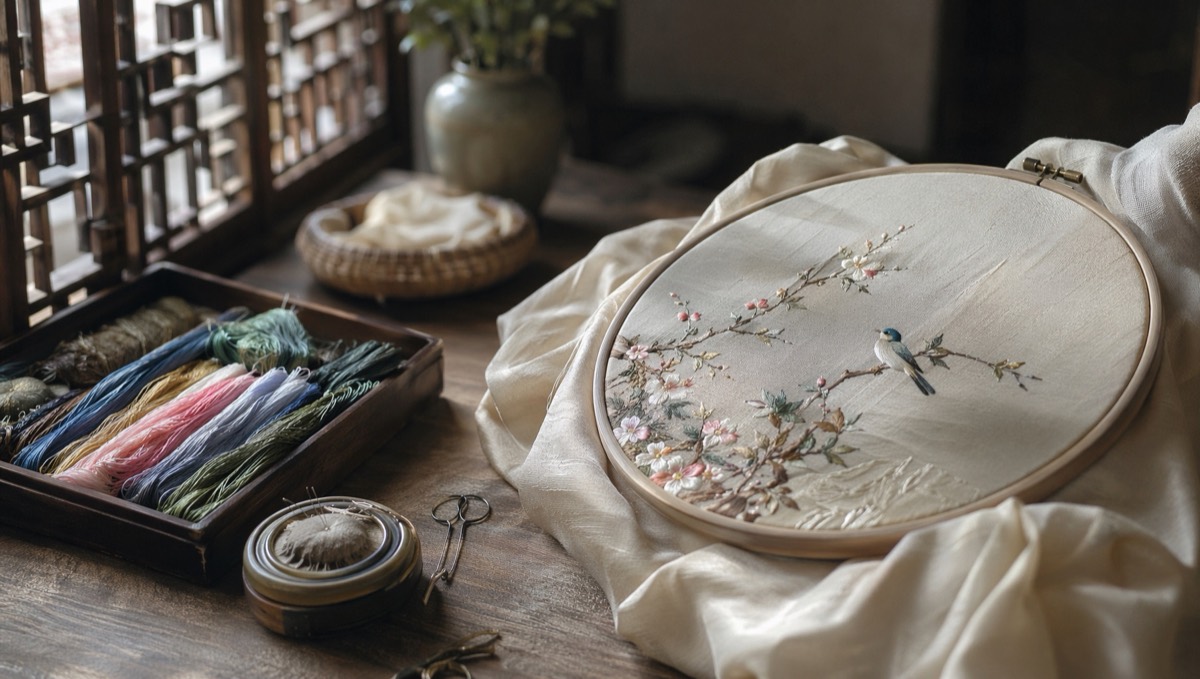
Chinese silk embroidery materials on a quiet craft table

Chinese Intangible Cultural Heritage | Shuxiu | Textile Craft

Shu Embroidery

Sichuan silk thread, fine stitches, layered color, and flower-and-bird motifs make Shu embroidery one of China's important regional textile crafts.

Sichuan Silk Craft

What is Shu embroidery?

Shu embroidery, also called Shuxiu, Chuan embroidery, or 蜀绣, is associated with Chengdu and other communities in Sichuan, as well as Chongqing.

The craft turns silk thread and cloth into images through disciplined stitching, thread control, color layering, and careful finishing. It is often known for refined surfaces, lively animals, flowers, birds, landscapes, and decorative objects.

A Chengdu tradition with a wider regional history

Shu embroidery is also called Chuan embroidery. Chengdu entered China's national intangible cultural heritage list for Shu embroidery in 2006, under project Ⅶ-21 and the category of traditional fine arts. Chongqing's Yuzhong District was added as an extension in 2008. The two entries recognize regional practice rather than a single workshop or one standardized appearance.

Why the stitches matter

The national heritage record emphasizes orderly stitching, a smooth and lustrous surface, and the combination of different stitches. Flowers, birds, insects, fish, and landscapes are among its subjects. A reader can compare how thread direction and changes of color describe a petal, feather, or leaf instead of judging the work only by its number of colors.

Materials follow the intended object

Sichuan's standard for Shu embroidery techniques covers hand-produced work using mulberry silk as a principal material. It distinguishes display pieces, including screens and hanging pictures, from useful textiles for daily life and the home. That distinction gives the design a practical setting: material choice, scale, mounting, and the intended use should be considered together.

Learning through stitch samples

For its 2018 exhibition of traditional Shu embroidery stitches, Chengdu Museum worked with practitioners to present samples using flowers, birds, insects, and fish. It also showed yijinwen stitches, 衣锦纹针, used to depict patterned clothing. The exhibition record is a useful historical reference for comparing how stitching creates different textures; it is not an announcement of a currently open exhibition.

Silk threads and needlework in Shu embroidery
Silk thread, pattern drawing, frame tension, and stitch direction all shape the final image.

Thread as Image

The surface is built one stitch decision at a time.

  • Region Shu embroidery is associated with Sichuan craft culture and Chengdu's long textile history.
  • Materials Silk cloth, silk thread, needles, drawing patterns, frames, and careful light matter in the workshop.
  • Motifs Flowers, birds, animals, landscapes, fish, insects, and decorative patterns are common subjects.
  • Use Embroidery appears in screens, panels, clothing, accessories, gifts, and decorative objects.

Traditional Process

How Shu embroidery is made

Needlework process for Chinese Shu embroidery
  1. Prepare the silkThe cloth is selected, stretched, and held under steady tension on a frame.
  2. Draw the designThe maker plans the image, line direction, color fields, and stitch rhythm.
  3. Split the threadSilk thread may be separated into finer strands for delicate shading and detail.
  4. Build with stitchesStitch density, direction, and color changes create texture, movement, and depth.
  5. Finish the objectThe finished stitching is checked before the work is mounted or made into its intended object.

Heritage Facts

Shu embroidery belongs to China's broader textile craft landscape.

For overseas readers, Shu embroidery is a useful entry point into regional craft identity: it shows how material, place, skill, and image-making work together.

Chinese Name蜀绣 Shuxiu
RegionChengdu and other communities in Sichuan; Chongqing, including the Yuzhong national heritage extension
CategoryEmbroidery and textile art; national register category: traditional fine arts
MaterialsSilk cloth, silk thread, needles, frames, drawing patterns

Common questions about Shu embroidery

Is Shu embroidery the same as Shu brocade?
No. Embroidery adds stitched designs to an existing ground fabric, while brocade creates patterned cloth through weaving. Their regional textile histories are related, but they are different processes.

Is Shu embroidery only made for display?
No. Sichuan's technique standard includes display pieces as well as useful textiles for daily life and the home.

Was Shu embroidery nationally recognized in 2006 or 2008?
Both dates occur in the register: Chengdu entered in 2006, and Chongqing's Yuzhong extension followed in 2008. The place and type of entry matter.

Sources and further reading

The images on this page are generated illustrations of craft context, not documentary photographs of a named maker or workshop.

Published by Living Heritage China · Updated 2026-10-21 · Editorial standards and corrections