Chinese Shadow Puppetry
Representative List reference for this heritage item.
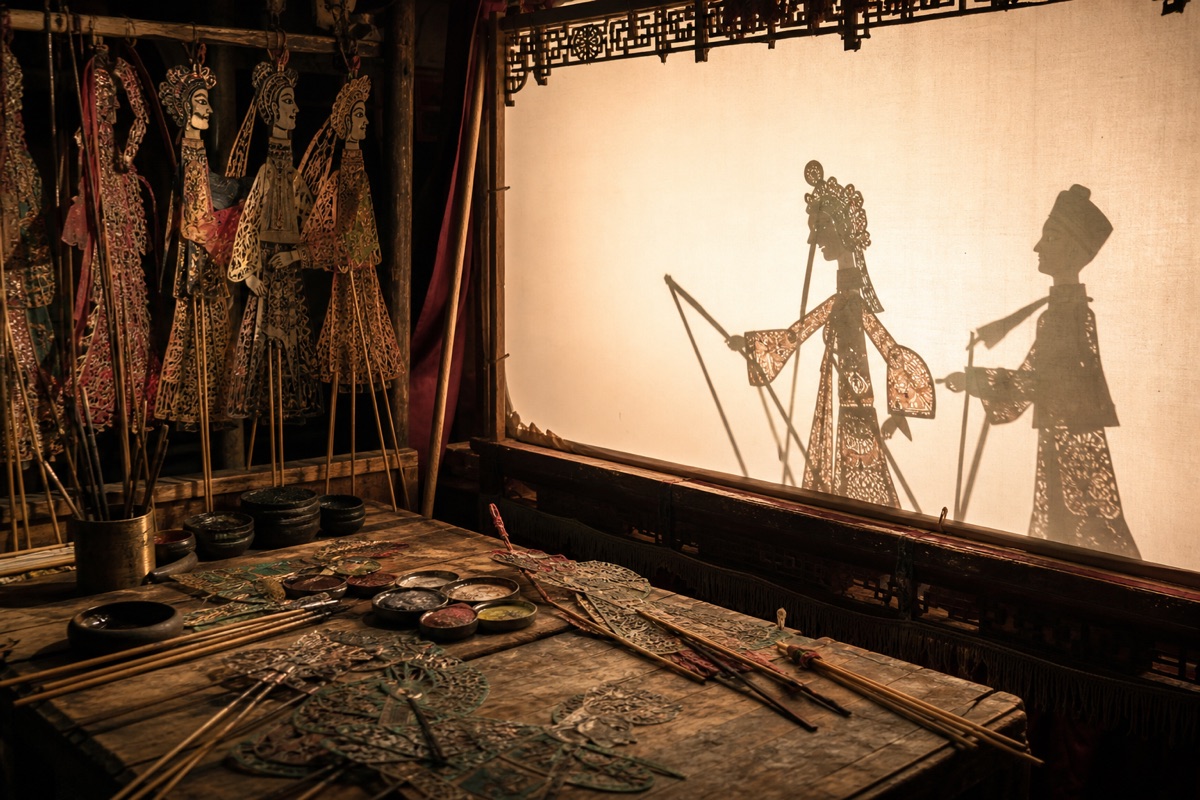
Chinese Intangible Cultural Heritage | Piyingxi | Performing Art
Chinese shadow puppetry, often called piyingxi, uses carved figures, rods, a lit screen, music, and spoken or sung narration to turn flat puppets into moving theatre.
Chinese Shadow Puppetry | 中国皮影戏
Chinese shadow puppetry, often called piyingxi, uses carved figures, rods, a lit screen, music, and spoken or sung narration to turn flat puppets into moving theatre.
UNESCO inscribed Chinese shadow puppetry on the Representative List in 2011.
The form is both craft and performance. Puppets are cut, carved, colored, jointed, and then animated by performers who coordinate movement, voice, music, and story behind the screen.
Performing Arts
Traditional Process
Heritage Facts
Found in many Chinese regions, with local repertoires, singing styles, puppet shapes, and troupe traditions.
FAQ
Are the puppets made only from paper?
No. Many Chinese shadow puppets are made from processed leather or hide, then carved, colored, and jointed.
Can the audience see the performers?
Usually the audience focuses on the screen while performers work behind it with light, rods, voice, and music.
Is shadow puppetry still practiced?
Yes, though local contexts vary; troupes, schools, festivals, and heritage programs continue to support transmission.
Sources and Related Guides
Representative List reference for this heritage item.
Explore Chinese calligraphy as living heritage through brush, ink, paper, script styles, training, expressive line, and cultural meaning.
Understand acupuncture and moxibustion of traditional Chinese medicine through tools, meridian theory, mugwort heat, training, and living practice.