Chinese Calligraphy
Representative List reference for this heritage item.
Chinese Intangible Cultural Heritage | Shufa | Writing Art
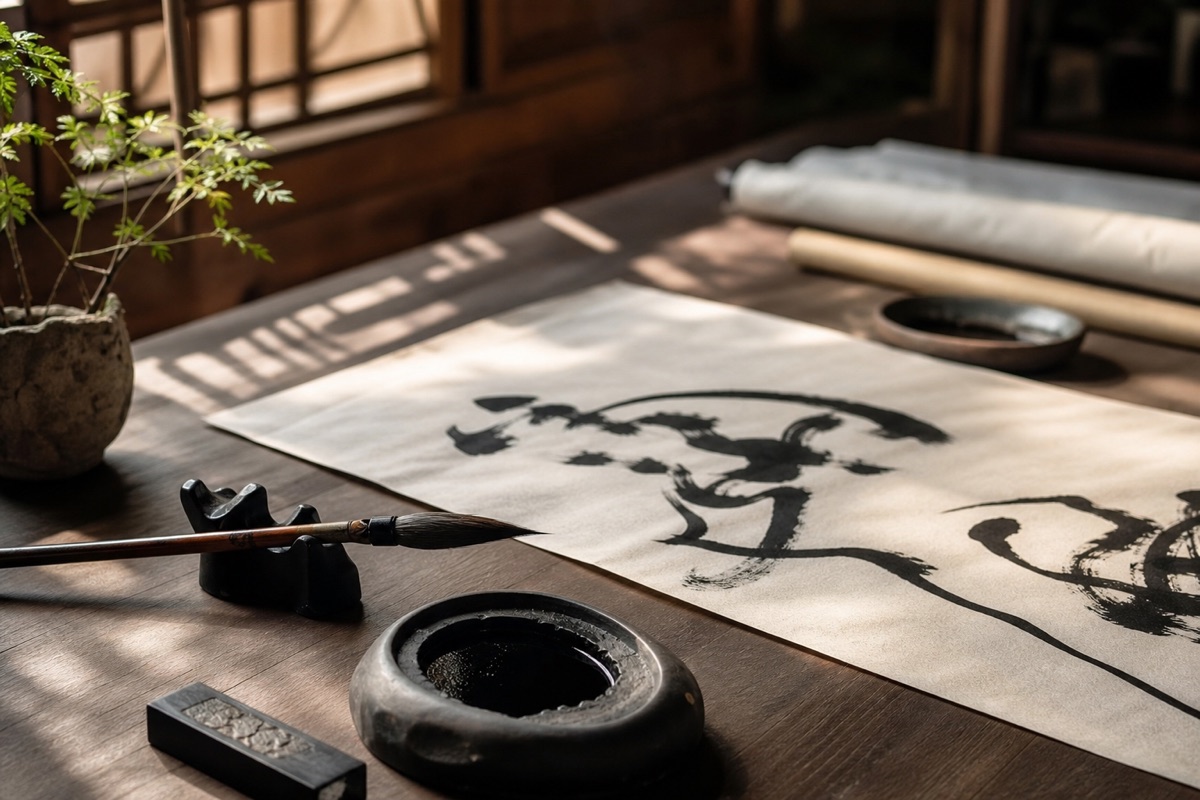
Chinese calligraphy, or shufa, is the art of writing Chinese characters with brush, ink, paper, and controlled movement. It is valued not only for readable words, but for rhythm, balance, pressure, speed, and the visible temperament of the writer.
Chinese Calligraphy | 书法
Chinese calligraphy, or shufa, is the art of writing Chinese characters with brush, ink, paper, and controlled movement. It is valued not only for readable words, but for rhythm, balance, pressure, speed, and the visible temperament of the writer.
UNESCO inscribed Chinese calligraphy on the Representative List of the Intangible Cultural Heritage of Humanity in 2009.
A written character becomes a visual event: a dot, hook, sweep, pause, and turn. The practice connects literacy, painting, poetry, seal use, education, and personal cultivation.
Writing Arts
Traditional Process
Heritage Facts
Practiced across China with many lineages, schools, teachers, and contemporary education settings.
FAQ
Is Chinese calligraphy just handwriting?
No. It uses writing as an artistic practice, where line quality, rhythm, structure, and space matter as much as legibility.
Do beginners start with cursive script?
Usually not. Many learners begin with regular script or copied models before exploring freer styles.
Why are brush and paper so important?
Their physical response controls line texture, ink spread, speed, and the visible feeling of each stroke.
Sources and Related Guides
Representative List reference for this heritage item.
Understand acupuncture and moxibustion of traditional Chinese medicine through tools, meridian theory, mugwort heat, training, and living practice.
Explore the Dragon Boat Festival, or Duanwu, through dragon boat racing, zongzi, seasonal customs, community memory, and living heritage.