Peking opera instruments form two connected groups
An educational account by Beijing Culture and Arts Activities Centre describes wenchang as bowed strings, plucked strings and winds, and wuchang as percussion. It lists jinghu, jing’erhu, yueqin, small sanxian, dizi, suona and sheng among the former. Bangu, large and small gongs, cymbals and tanggu drums appear among the latter.
These are divisions within one accompanying ensemble. The translated labels civil and martial should not suggest that the players belong to two unrelated performances. Their different techniques contribute to the same dramatic encounter, and the musical forces can vary with the production.
Jinghu leads a melodic relationship with the voice
Jinghu (京胡) occupies a leading position in much singing accompaniment. Beijing Opera Theatre calls the musician principally responsible for it the qinshi (琴师). This player leads the other wenchang musicians while coordinating with the drummer and actor.
Jing’erhu (京二胡) is a separate named instrument in the ensemble, not another spelling of jinghu. The academy’s training document lists the two as distinct specializations alongside yueqin and sanxian. Reading an actual instrument label is more reliable than calling every Chinese bowed instrument a jinghu.
Yueqin gives a concrete plucked-string example
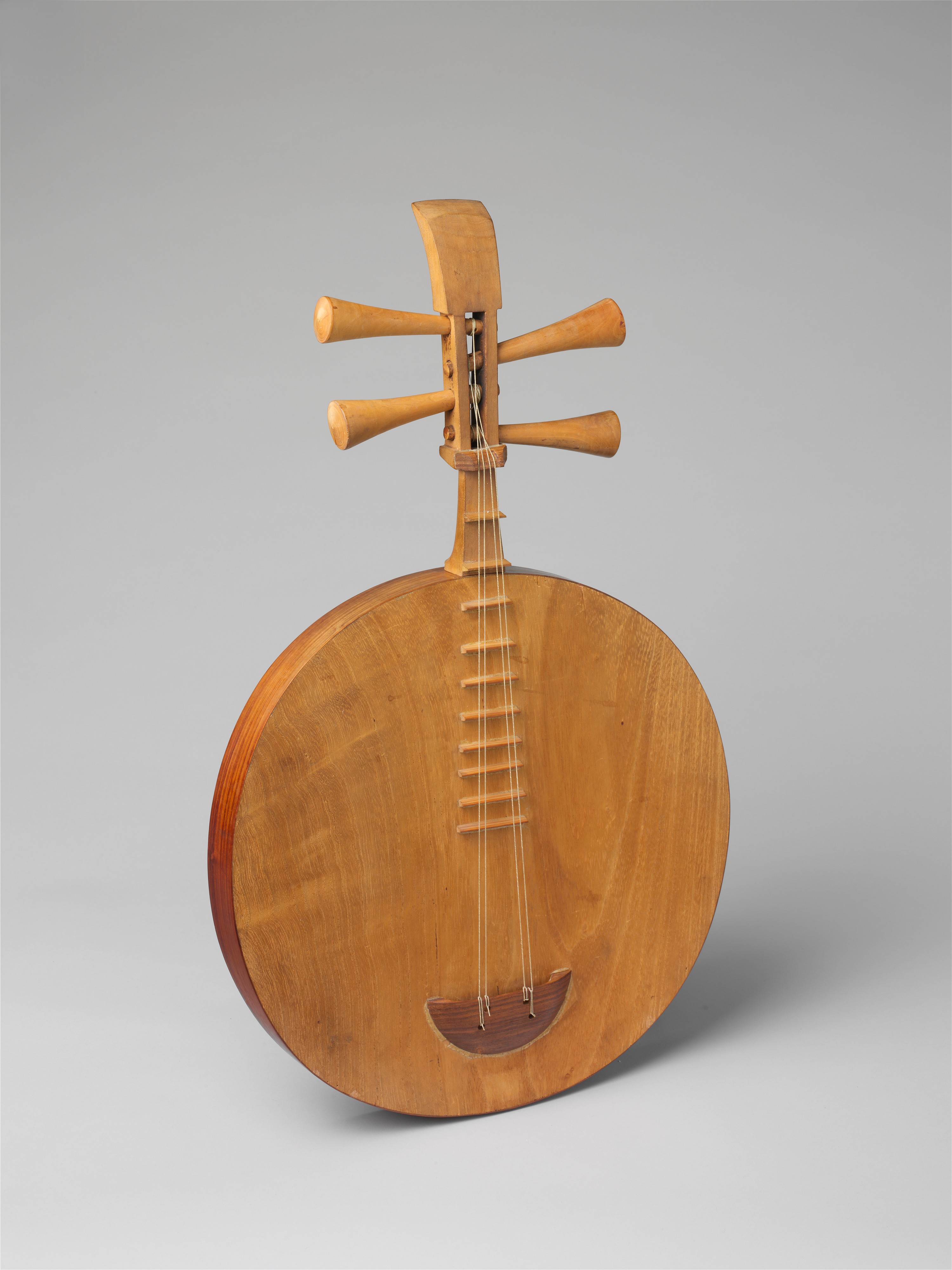
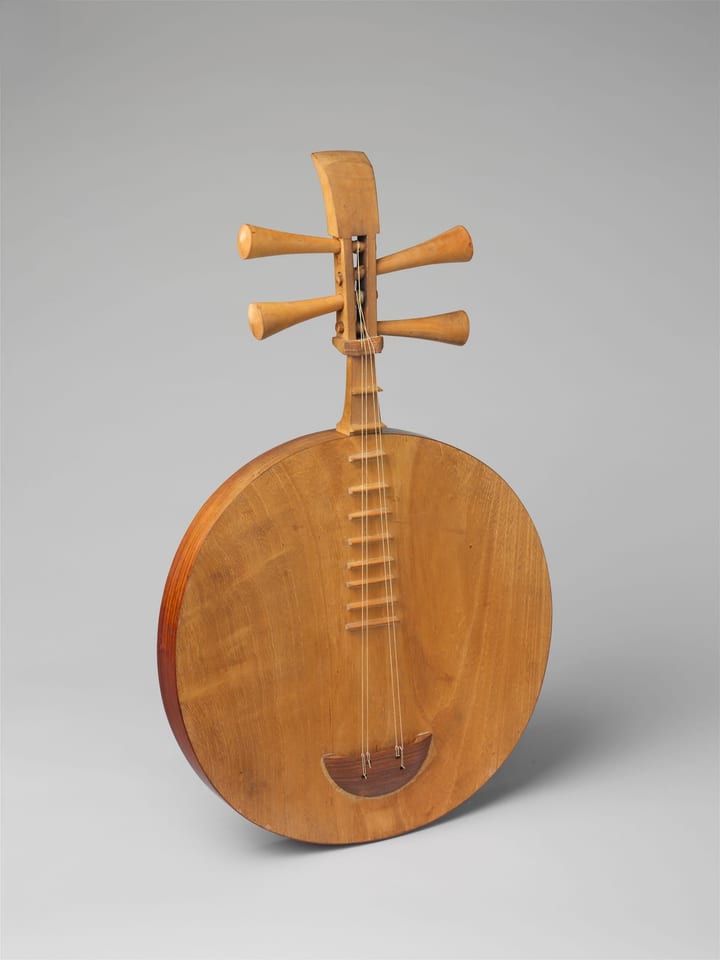
The Met identifies yueqin (月琴) as a round-bodied, fretted lute used in popular ensembles and Beijing opera. Its explanation describes plucking with fingernails or a pick, including repeated strokes and tremolo that can sustain a tone. This is a different sound-producing action from bowing.
The photograph shows its nineteenth-century Chinese example, accession 89.4.53. The catalogue describes four strings tuned in pairs. Keep that historical example distinct from claims about every modern instrument. The object record establishes what this lute is; it does not establish that this particular surviving instrument accompanied a named Peking-opera production.
Percussion organizes more than combat
The Capital Museum’s account identifies percussion as the wuchang and emphasizes the directing function of drum and clappers in controlling the ensemble’s pace. The large gong, daluo (大锣), small gong, xiaoluo (小锣), and naobo cymbals (铙钹) provide different resources within that group.
Beijing Opera Theatre calls the leading percussion musician the gushi (鼓师), also known as sigu (司鼓). Drum-and-clapper patterns and gestures guide accompaniment through changes in speed, strength and dramatic situation. Percussion can coordinate speech, movement and transitions as well as martial action; its function is broader than making a battle louder.
The chosen passage affects the instrumental combination
Beijing Opera Theatre describes combinations organized around different musical needs. Jinghu with other strings accompanies major vocal material, while flute-led combinations serve other parts of the repertory, including Kunqu material within Peking opera. Suona also has vocal and instrumental uses.
This makes an instrument list a starting point rather than a fixed score for the whole evening. Listen for which group is active under the voice, which instruments carry an instrumental passage, and how a new combination relates to a change in the scene.
Training includes knowledge of the sung phrase
The National Academy of Chinese Theatre Arts’ 2022 instrumental assessment document gives a specific example. Its string specializations had to present singing accompaniment, then put the instrument down and sing the passage while marking the beat, including the instrumental interludes. Percussion applicants also had a singing requirement.
The same document lists flute and suona work for yueqin and sanxian applicants, and small-gong work alongside principal percussion specializations. These dated requirements show how the academy connected a primary instrument with broader repertory knowledge. They are evidence of that training approach, not current admissions instructions.
A contemporary production can expand an instrument’s task
In its October 2026 account of the new historical opera Xian Taifuren, the academy describes jinghu retaining its singing-accompaniment role while also taking instrumental solo passages. In the overture it enters a dialogue with a low-register pipa; a later dance passage gives it a solo role.
This is a documented production choice, rather than a new definition of every Peking-opera orchestra. It shows why a familiar instrument can perform different tasks within an arrangement. The relevant questions are which production is being discussed, what the musicians are playing, and how that part supports the drama.
Connect the musical leaders without confusing their jobs
The Capital Museum places overall pacing with the leading percussion position. That directing role provides a reference when following changes in the scene.
For a first listening, follow one sung phrase and its instrumental continuation, then notice the percussion that frames a movement or transition. That focused comparison makes the division of work audible without requiring every instrument to be identified at once.
Images and credits
Yueqin (月琴), China, 19th century; rosewood, wu-tong (paulownia) wood and gut. The Metropolitan Museum of Art, 89.4.53, The Crosby Brown Collection of Musical Instruments, 1889. Public domain/CC0. Complete official photograph DP218943; no crop. The instrument type is documented in Beijing opera, but this object is not assigned a named production or a confirmed stage-use history. Resized for display.