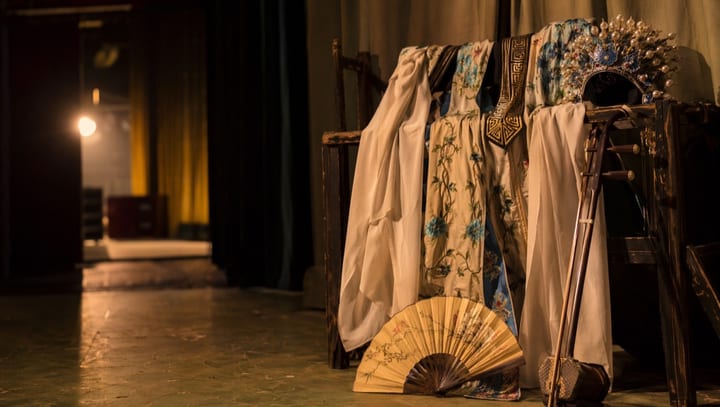
Illustrative Chinese theatre wardrobe with embroidered robes, headdresses, and a folding fan

Chinese theatre and performing arts comparison | 京剧与昆曲

Peking Opera vs Kunqu

Peking opera vs Kunqu compares two distinct Chinese theatre traditions with connected histories. Kunqu (昆曲) grew from the Kunshan region and combines literary texts with its own musical and movement system. Peking opera, or Jingju (京剧), developed in Beijing through exchanges among regional forms. Both unite singing, speech, movement, and characterization.

Peking opera vs Kunqu: origins and identities

The China ICH record traces Kunqu to southern theatre's encounter with music, language, and performance around Kunshan. Ming-period changes helped shape its melodic tradition and stage repertory. Its influence spread beyond Jiangnan, south of the lower Yangtze. Kunqu is performed beyond Suzhou today.

Peking opera took shape later, during the Qing dynasty. The National Museum of China describes Anhui troupes in Beijing interacting with Kunqiang and Hubei theatre, helping form the Pihuang tradition. This was a process of exchange, not a genre invented fully formed on one day. Kunqu influenced the later form without becoming interchangeable with it.

How the singing is organized

Kunqu uses qupai, named tune patterns with particular musical and verse structures. Hong Kong's Education Bureau describes its long and short verse lines and careful articulation of a word's beginning, middle, and ending. Singing and movement are closely joined: the actor develops the gesture while carrying the phrase.

Peking opera's principal vocal systems are xipi and erhuang. The National Peking Opera Company explains how banshi, rhythmic forms, expand, compress, or freely shape melodic phrases to serve a scene. These combinations can support reflection, narration, or dramatic confrontation. This structural contrast is more useful than reducing either tradition to one sound or mood.

Instruments and performance skills

A jinghu leads much Peking-opera melodic accompaniment; percussion coordinates movement, speech, and transitions. Kunqu prominently uses flute, drum, and clappers. Instrumentation varies with the scene: Beijing Opera Theatre also describes flute accompaniment for Kunqu material within Peking-opera repertory.

Peking-opera training is often described through chang, nian, zuo, and da: singing, speech, acting or movement, and combat skills. Kunqu likewise integrates voice, speech, and physical expression. Kunqu includes martial theatre: the National Central University Kunqu Museum documents weapon work and tumbling coordinated with singing and percussion. Neither genre is limited to romantic or martial stories.

Shared conventions, distinct role techniques

Peking opera groups its main roles as sheng, dan, jing, and chou, with further specializations. The Kunqu record describes a more finely divided role system. Shared labels do not make training identical: each tradition has conventions for voice, posture, and movement.

Stylization is central to both. A Peking-opera horsewhip and coordinated bodily movement can represent riding, as the National Peking Opera Company demonstrates. The prop works through performance. In Kunqu, closely joined singing and gesture likewise make movement carry dramatic meaning. Costumes or elaborate makeup alone are an unreliable way to understand the difference.

Repertory, excerpts, and living transmission

Kunqu repertory includes literary works such as The Peony Pavilion and The Palace of Eternal Life. Selected scenes, called zhezixi, have an important performance history. Ask whether a programme presents a full production or excerpts; the format affects how much of the story the audience receives.

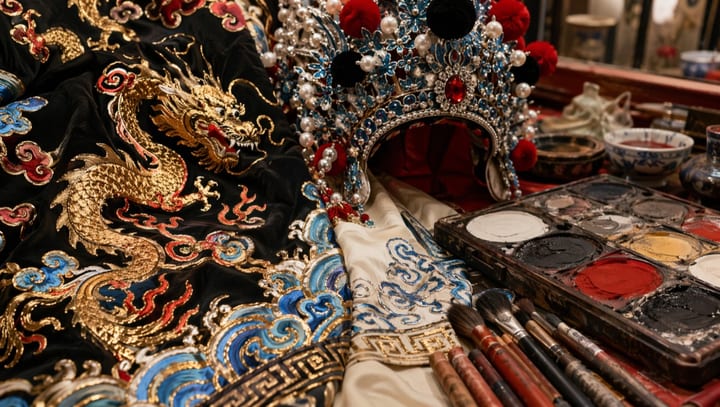
Explore the separate Peking-opera and Kunqu guides below. Our images are project-created illustrations of a theatre wardrobe, stage, and costume materials, not a documentary photograph of named performers, authenticated costumes, or a production.
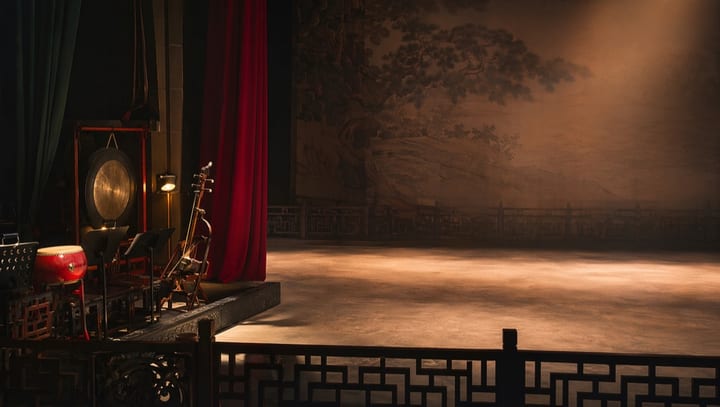
Illustrative theatre stage with a backdrop, gong, and drum at the side

Peking Opera vs Kunqu in practice

These forms preserve ways of making stories audible and visible through trained bodies and music. Their exchanges show that distinct theatrical identities can develop through borrowing as well as continuity.

Illustrative Chinese theatre costume embroidery, headdress, brushes, and makeup materials

Peking Opera vs Kunqu in practice

These forms preserve ways of making stories audible and visible through trained bodies and music. Their exchanges show that distinct theatrical identities can develop through borrowing as well as continuity.

How Peking Opera vs Kunqu is practiced

  1. Learn the role and textPerformers study the character and the techniques of their role specialization. Speech, singing, and physical expression are developed together.
  2. Rehearse the musical structureKunqu performers work within the chosen qupai; Peking-opera performers shape the scene through its vocal system and rhythmic forms.
  3. Join voice and movementGaze, posture, steps, and gestures are coordinated with the phrase. Martial passages add rehearsed weapon or acrobatic techniques where the repertory requires them.
  4. Coordinate with the ensembleMusicians and actors align accompaniment, percussion, entrances, and transitions so the scene's action and musical timing work together.
  5. Perform the chosen productionCostume, makeup, props, voice, and movement present the character. A programme may offer a complete production or selected repertory scenes.

Place, craft, and cultural meaning

These forms preserve ways of making stories audible and visible through trained bodies and music. Their exchanges show that distinct theatrical identities can develop through borrowing as well as continuity.

Chinese Name京剧与昆曲
Region or OriginKunqu: Kunshan and the Suzhou region of Jiangsu. Peking opera: developed in Beijing through exchanges among regional theatre traditions. Both are performed beyond these origins.
CategoryChinese theatre and performing arts comparison
MaterialsScripts, musical patterns, costumes, makeup, stage props, and trained voice and movement.
ToolsPeking opera commonly uses jinghu-led melodic accompaniment and percussion. Kunqu accompaniment prominently uses bamboo flute, drum, and clappers.
UsesStage storytelling, repertory performance, actor training, cultural education, and transmission of music and movement knowledge.

Common questions

Is Kunqu an older name for Peking opera?
No. Kunqu is an earlier, distinct tradition. It influenced Peking opera, which formed through several regional theatrical exchanges in Beijing.

Is Kunqu always slow, and Peking opera always martial?
No. A scene's role, music, and action matter. Kunqu includes martial repertory, while Peking-opera vocal forms support lyrical reflection as well as dramatic confrontation.

What is a useful first comparison?
Listen for how a phrase is organized, then follow the actor's movement and its relation to the ensemble. A short scene can reveal this coordination in either tradition.

Sources and further reading