Xuan paper vs rice paper: one name is more specific
UNESCO’s Xuan-paper record locates the practice in Jing County and describes bark and rice straw as materials. The inscription concerns this named craft, rather than every pale sheet carrying an English rice-paper label.
For a museum object or an art supply, rice paper alone is not a sufficient material description. Ask whether the term means Xuan paper, another fibrous paper, or a different paper-like support. The maker’s specification or the collection record should supply the answer.
Rice straw belongs in the explanation
It is misleading to correct the English name by saying Xuan paper contains no rice material. The China ICH portal identifies blue sandalwood bark and selected rice straw as its principal fibers. Rice straw is the plant’s stalk material, not rice grains made into a sheet.
There is no unchanging fiber ratio for all Xuan paper. The official project distinguishes product groups by bark content, thickness, and sheet-forming marks. A craft name does not remove these production choices.
Pith “paper” explains another source of confusion
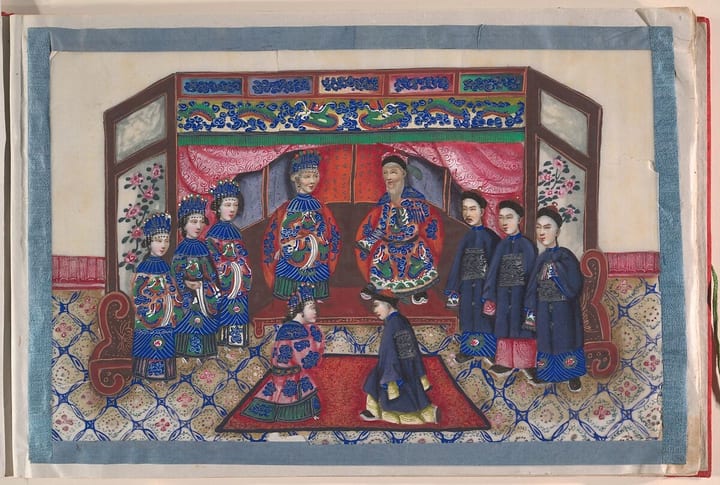
The Library of Congress documents Chinese export paintings on pith that were often incorrectly called rice paper. Pith is cut from the inner plant material of stems and branches into sheets. The Library distinguishes this cellular structure from paper formed from dispersed, matted fibers.
That distinction matters when reading an old album’s description. A thin white painting support need not be Xuan paper simply because someone called it rice paper. The example establishes a documented naming problem; it does not mean that every use of the English term refers to pith.
Surface preparation changes how ink behaves
The Palace Museum distinguishes shengxuan (生宣) and shuxuan (熟宣). Untreated shengxuan lets water and ink penetrate readily; alum-treated shuxuan slows that penetration and supports controlled detail and repeated coloring. These are working differences within Xuan paper, not two interchangeable English translations.
The China ICH project also lists finishing methods such as sizing, coloring, polishing, and waxing. Appearance and absorbency therefore depend on more than the fiber name. Knowing the treatment helps explain why two sheets carrying the same broad name can respond differently to a brush.
Read a sheet’s description before making a comparison
Look for the named paper, maker or place, fibers, surface treatment, and intended use. For new practice paper, a small offcut can show how your ink spreads under a particular stroke. That observation describes behavior; it cannot authenticate the paper’s origin or reveal an exact fiber percentage.
The related printing comparison explains how paper receives ink from a carved block or an assembled page of type.
Photographs and material boundaries
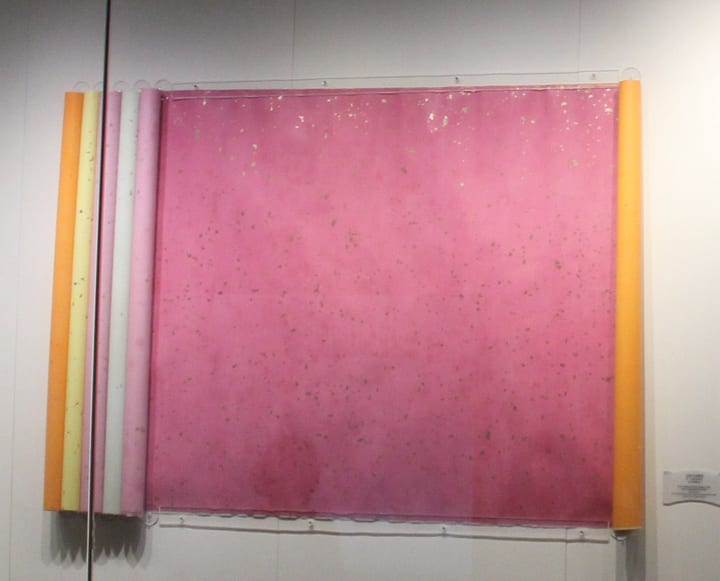
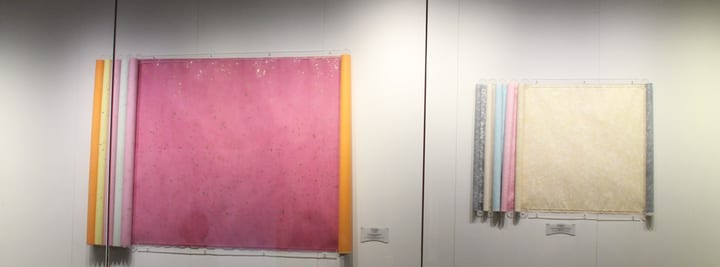
The hero shows paper samples in a Xuan paper display at Anhui Provincial Museum, photographed by Gary Todd (CC0). The first detail is cropped from that same photograph; these are museum material views, not a sequence of papermaking steps. The other image is a leaf from Album, China, late nineteenth century, The Metropolitan Museum of Art 43.157, Anonymous Gift, 1943. Its support is catalogued as pith paper, not Xuan paper. Photographs were cropped where stated and resized for web display. Source and rights links appear below.