Mother-of-pearl lacquer inlay begins with shell
Mother-of-pearl is nacreous shell material, not a collection of round pearls attached to a vessel. A Palace Museum account of thin-shell lacquer describes selecting the inner lustrous layer, grinding it into thin pieces, cutting, inlaying, and finishing.
The selection is a material decision as well as a visual one. Different shell pieces can offer different appearances, and the thickness and shape must suit the design. This does not establish one shell species or a fixed thickness for every work called luodian.
One documented way to set and reveal the pieces
The Palace Museum’s Daqi luodian entry describes a lacquer-furniture method. Prepared shell pieces are attached while lacquer remains unset, and ground material fills the surrounding areas. Later coating and grinding expose the shell pattern within the finished surface.
This differs from gluing decoration onto a completed object. It also shows why inlay should not mean one universal sequence of cutting individual pockets. Different methods and shell thicknesses have their own procedures; the stages below retain that variation.
A museum tray makes the picture-building visible
The Met’s current record identifies its Rectangular tray with flowering plums and magpies as a fourteenth-century Chinese work in black lacquer with mother-of-pearl inlay. Its object number is 2015.500.1.56.
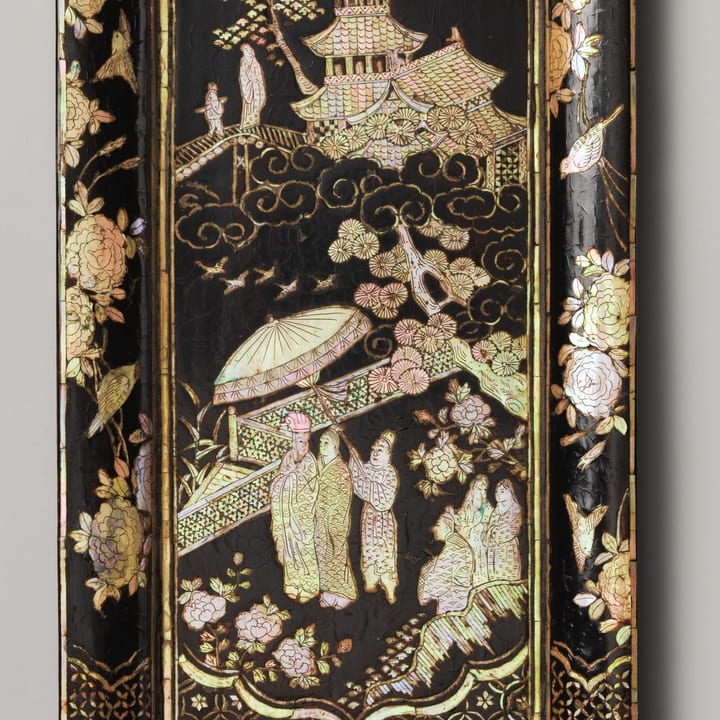
The museum describes narrow shell lines defining terrain, irregular pieces making a rocky outcrop, and fragments forming the tree trunk. The example shows how changing the cut and placement of shell can give different pictorial roles to the same broad material. A floral scene is constructed from many decisions, not produced by shine alone.
Object form changes the decorative task
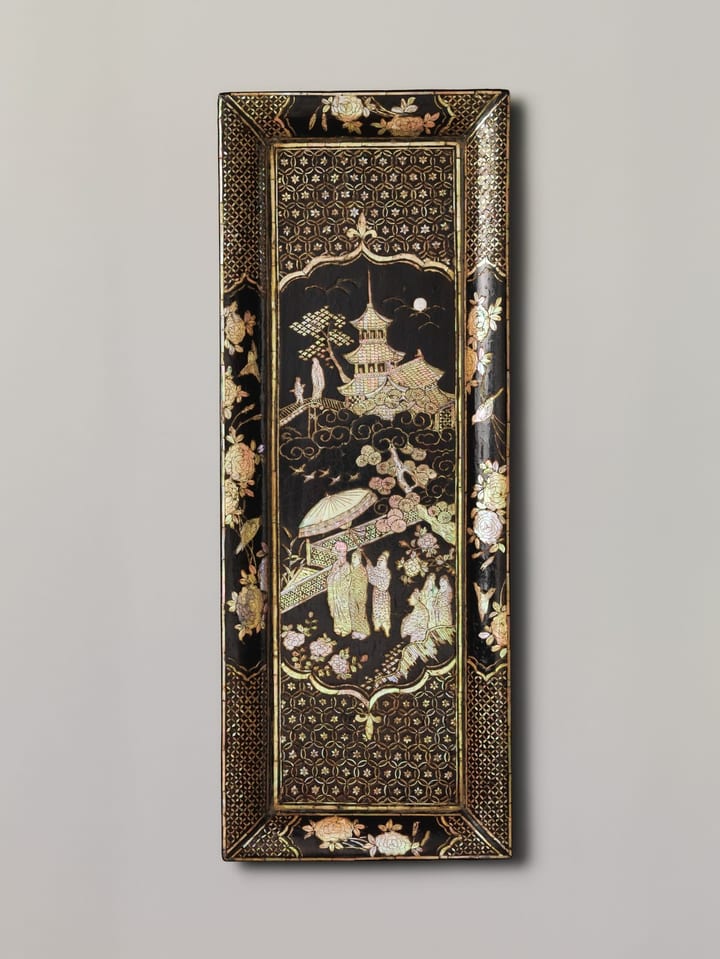
A second Met object, Tray with inlay, is catalogued as Chinese, Ming dynasty, 1368–1644, with the medium lacquer with mother-of-pearl inlay. Its object number is 2015.500.1.99. The record establishes a particular object rather than a date for the invention of the craft.
A tray’s field, edge, and proportions organize the space; a box or furnishing creates other surfaces. Compare forms after reading their records. Similar decoration need not imply identical construction or workshop practice.
Iridescence is an effect to observe carefully
Nacre’s layered structure can produce iridescence as light interacts with it. GIA’s microscopy account discusses this optical effect in nacre. The Met likewise describes iridescent shell in its inlaid tray, grounding the term in an actual object.
A photograph captures particular lighting and viewing conditions. A pale or strongly colored patch in one image cannot establish shell species, exact thickness, pigment, or authenticity. Nor should every bright color be attributed entirely to bare shell: the full material and finishing record matters. Avoid promising that every inlaid piece displays the same rainbow effect.
Inlay and carved lacquer make images differently
Inlay adds and arranges shell pieces within the lacquered surface. Carved lacquer instead builds lacquer thick enough for cutting a relief design. These are different craft operations, even when their objects share flowers, birds, or similar vessel forms.
The carved-lacquer guide explains that process; the broader lacquerware guides explain the material system. Retain a museum object’s actual title, date, and medium instead of identifying it from a generic resemblance.
Museum photographs and credits
Tray with inlay, China, 1368–1644; lacquer with mother-of-pearl inlay. The Met, 2015.500.1.99. Front view of a finished Ming-dynasty object. Public domain/CC0; resized. Changes: Full original composition retained; downscaled proportionally and JPEG-optimized. No content retouching, recoloring, compositing, rotation, generative editing or upscaling. Source and rights links appear below. No museum endorsement is implied.
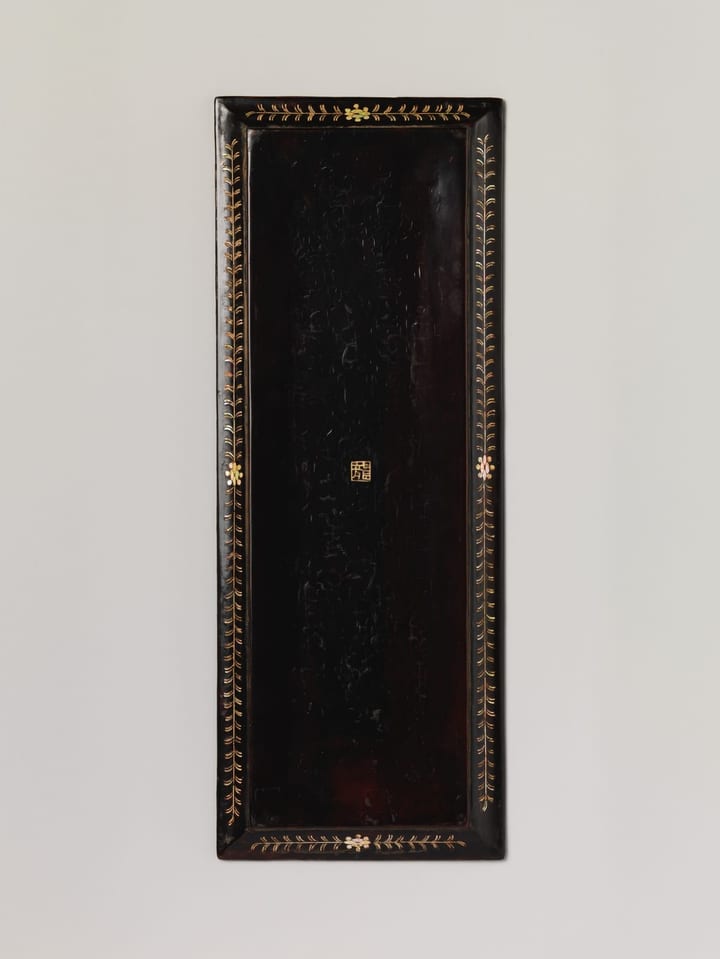
Reverse view of the same tray, The Met, 2015.500.1.99. This second museum photograph shows the back of the finished object; it does not document shell cutting or laying inlay. Public domain/CC0; resized. Changes: Full original composition retained; downscaled proportionally and JPEG-optimized. No content retouching, recoloring, compositing, rotation, generative editing or upscaling. Source and rights links appear below. No museum endorsement is implied.
Detail crop from the front photograph of the same Ming tray shown above, The Met, 2015.500.1.99. The shell pieces form contrasting figures and scenery on black lacquer. Public domain/CC0; cropped and resized. Changes: Cropped from the original museum photograph to the recorded native-pixel crop box; downscaled proportionally and JPEG-optimized. No content retouching, recoloring, compositing, rotation, generative editing or upscaling. Source and rights links appear below. No museum endorsement is implied.