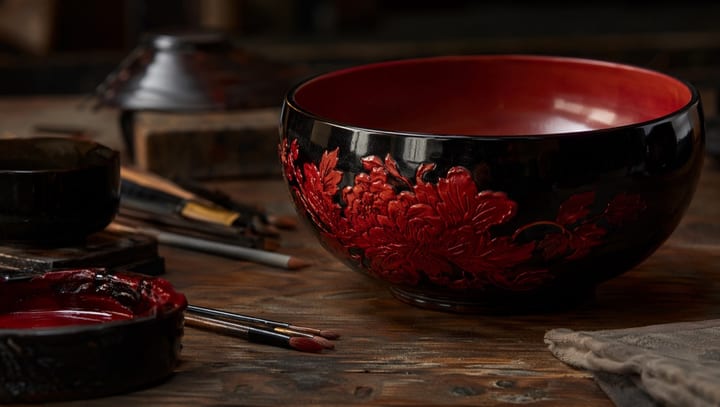
Illustrative red and black lacquer bowl with floral decoration on a workshop table

Traditional crafts and material comparison | 漆器与陶瓷

Chinese Lacquerware vs Ceramics: Core and Surface

Chinese lacquerware vs ceramics is a comparison of how an object is built, not simply how shiny it looks. Lacquerware uses lacquer over a support or within a layered structure. Ceramics have a body transformed by firing. Those different routes help explain the surfaces of bowls, boxes, and decorative vessels.

Chinese lacquerware vs ceramics: what forms the object?

In traditional lacquerwork, daqi (大漆) refers to natural lacquer, while qiqi (漆器) names lacquerware. A support establishes the shape; lacquer coats or builds upon it. The China ICH portal’s Beijing field study documents wood and copper cores, and cloth structures made over removable forms.

A ceramic body changes in a kiln. Ceramic is the broader category: porcelain is one type, alongside earthenware and stoneware. The V&A explains that firing permanently transforms clay. Glaze, when used, belongs to this fired material system; it is not natural tree lacquer.

A glossy surface can hide very different making methods

Carved lacquer is made by cutting into accumulated lacquer layers. The Metropolitan Museum distinguishes this from painted and inlaid decoration. The relief may be in the coating rather than the supporting wood. A red carved box and a red glazed pot can share a color while having different structures.

Ceramic decoration may sit under or over a glaze. The V&A’s glossary explains underglaze decoration as decoration beneath the glaze layer. Ceramics can also remain unglazed. Gloss, color, and floral motifs alone cannot identify a material or technique.

Two regional examples make the distinction concrete

Jingdezhen in Jiangxi is associated with porcelain. UNESCO’s account of its handicraft industry sites describes innovations in combining kaolin and porcelain stone, alongside kilns and organized production. That evidence concerns a particular place and industry, not every Chinese ceramic object.

In Longquan, Zhejiang, UNESCO describes glaze applied to fired stoneware and then fired again under controlled conditions. This contrasts with repeated lacquer application and curing. Longquan’s procedure should not be treated as the recipe for all ceramics.

Questions that make a comparison useful

Ask what forms the body or core, what covers it, and how the decoration was made. A label specifying carved lacquer answers a different question from one specifying glazed stoneware. Read the material line before interpreting the design.

For a contemporary object, the maker’s description should establish materials and intended use. This comparison does not rank the crafts by price, durability, or suitability for food. It provides vocabulary for questions about a particular piece.

About the illustration

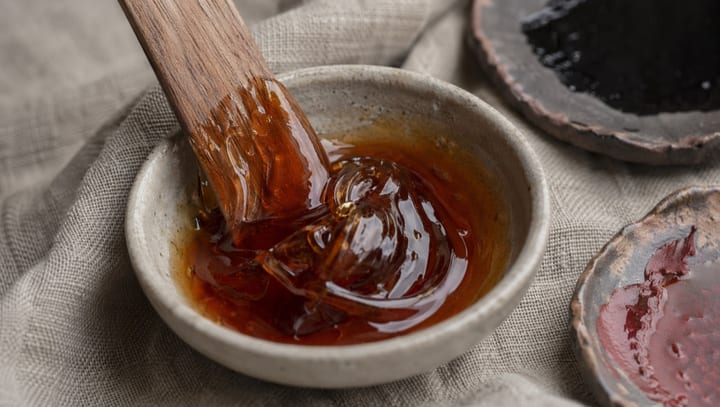
The images are project-created illustrations of a lacquer bowl, coating work, and materials. They show the lacquer side of this comparison; they are not photographs of named museum objects or evidence of a ceramic firing technique. The sources below establish the material distinctions.
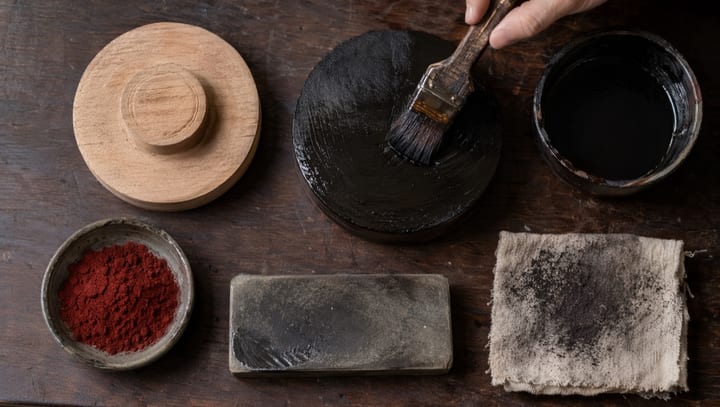
Illustrative lacquer application to a round wooden support beside a brush and coating materials

Chinese Lacquerware vs Ceramics: Core and Surface in practice

Comparing the two reveals different kinds of workshop knowledge: building and working lacquer layers, or controlling clay bodies, glazes, and firing. Regional practices give these materials their particular forms.

Illustrative lacquer material and brush in a mixing bowl

Chinese Lacquerware vs Ceramics: Core and Surface in practice

Comparing the two reveals different kinds of workshop knowledge: building and working lacquer layers, or controlling clay bodies, glazes, and firing. Regional practices give these materials their particular forms.

How Chinese Lacquerware vs Ceramics: Core and Surface is practiced

  1. Lacquer: prepare the supportForm the chosen support and prepare its ground. Beijing carved lacquer records show that different objects can require different cores.
  2. Lacquer: apply and cureApply thin coats, allowing each to set before continuing. The Met describes warm, humid curing conditions. This builds the material that will later be worked.
  3. Lacquer: carve and finishFor carved lacquer, transfer the design and cut into the accumulated coating, then finish and polish. Painting and inlay follow different routes.
  4. Ceramics: form the bodyPrepare and shape the chosen clay-based body. The mixture depends on the tradition; porcelain is not the recipe for every ceramic.
  5. Ceramics: prepare the surfaceDry the formed body and decorate or glaze at the appropriate stage. Some wares remain unglazed; firing sequences vary.
  6. Ceramics: fire and coolUse the appropriate kiln cycle. Longquan’s documented method includes firing stoneware, glazing it, and firing again with controlled heating and cooling.

Place, craft, and cultural meaning

Comparing the two reveals different kinds of workshop knowledge: building and working lacquer layers, or controlling clay bodies, glazes, and firing. Regional practices give these materials their particular forms.

Chinese Name漆器与陶瓷
Region or OriginChina; examples include Beijing carved lacquer, Jingdezhen porcelain in Jiangxi, and Longquan celadon in Zhejiang.
CategoryTraditional crafts and material comparison
MaterialsLacquerware: natural lacquer and a support such as wood, metal, or cloth. Ceramics: a clay-based body, sometimes with glaze and decorative pigments.
ToolsLacquer application tools, carving knives, and polishing materials; ceramic forming tools, brushes, and kilns.
UsesVessels and decorative objects; lacquer also appears on furniture. Uses depend on the object and its making tradition.

Common questions

Is lacquerware a type of ceramic?
The terms describe different material systems: lacquerwork and fired clay. Describe the core and surface separately when identifying a particular object.

Is every shiny Chinese bowl porcelain?
No. Shine describes a surface, not the body beneath it. A label or maker’s material description is more informative than appearance alone.

Does carved lacquer mean carved wood?
In the carved lacquer technique described by the Met, the relief is cut into built-up lacquer layers. The supporting core is a separate part of the object.

Sources and further reading