Guqin vs guzheng: begin with the bridges
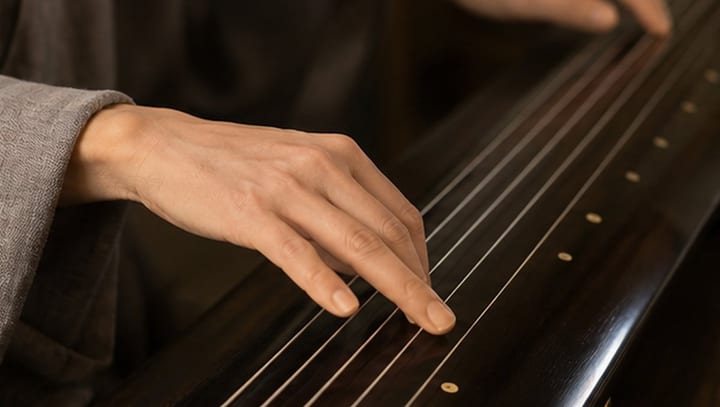
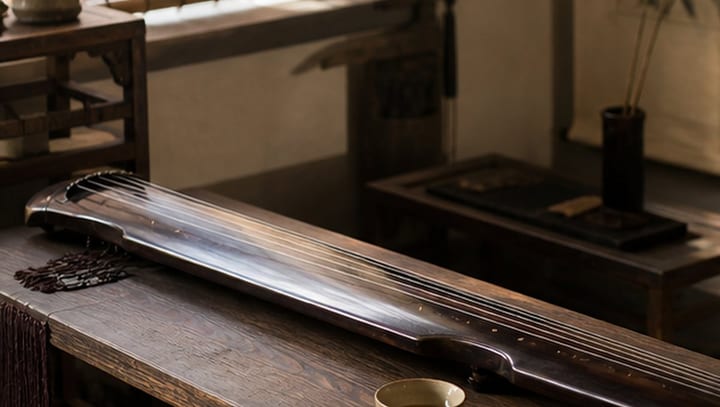
The clearest structural clue is the guzheng's row of adjustable bridges. They support the strings across the soundboard and establish their sounding lengths. On the guqin, the strings run over an open playing surface without this row. The left hand can press and slide along that surface while the right hand plucks.
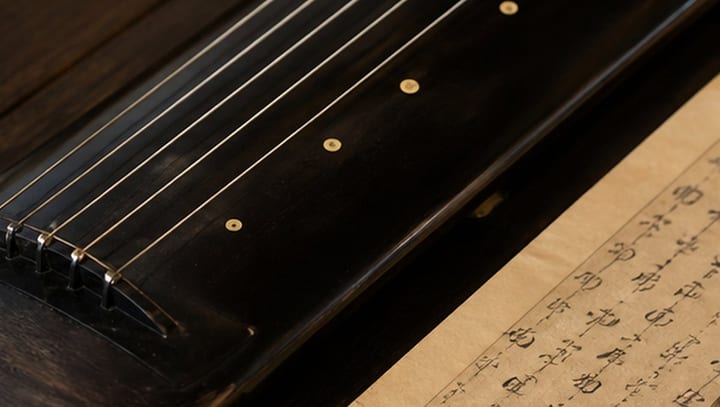
Saying that the guqin has no bridges at all is an oversimplification. Hong Kong Memory's instrument-making account identifies yueshan, the fixed bridge at the head, and longyin, a supporting piece at the tail. The useful distinction is between these end supports and the guzheng's separate movable bridges. The guqin's thirteen hui markers are position references, not raised frets or additional strings.
Seven strings and a changing zheng family
Seven strings describe the established guqin form discussed by UNESCO. Twenty-one describes a common modern guzheng, not every historical zheng. Smithsonian notes document earlier twelve- and thirteen-string forms and continuing use of sixteen-string instruments among some traditional players.
String material has changed too. The Met's historical guqin includes silk strings; its Chizhou zheng record describes a nineteenth-century instrument with metal strings. Smithsonian notes identify nylon-wound steel as common on modern zheng. Material and string count need a date and a regional context.
How the hands shape the sound
Guqin music distinguishes open-string sounds, stopped sounds, and harmonics. UNESCO describes the right hand plucking while the left either presses a string or touches it lightly at harmonic positions. Pressed notes can be connected by sliding along the string. One string therefore supplies more than one pitch and more than one kind of tone.
On the zheng, the player commonly plucks on one side of the movable bridge and manipulates the string on the other. The Met describes different playing styles, including attached fingerpicks in Chaozhou practice. Florida's Folklife Program explains how pressing strings changes pitch and creates sliding notes or vibrato. The note can continue to change after the initial pluck.
Musical settings and regional traditions
Guqin has strong historical connections with literati self-cultivation and intimate music-making. The Met's guqin interpretation places it alongside writing, painting, gardens, and cultivated reflection. That history helps explain its cultural associations, but it does not describe every contemporary performance or listener.
The zheng has histories in court ensembles, domestic music, and regional practices. A nineteenth-century Chizhou example and documented Chaozhou playing styles already point beyond one uniform tradition. Smithsonian's concert archive presents a modern solo programme. Guqin also appears in ensembles and new compositions, as Hong Kong's Music Office demonstrates. Neither instrument is confined to one setting or emotional character.
Notation and titles need context
Guqin's jianzipu, or abbreviated-character tablature, records actions such as string choice, finger position, and plucking technique. Traditional tablature does not directly specify rhythm; teaching and interpretation help turn its instructions into a performance. Learning this system involves more than reading a sequence of pitch names.
A familiar title does not guarantee identical music on another instrument. Hong Kong concert notes explicitly distinguish a Chaozhou version of Wild Geese on the Sandbank from a guqin piece with the same title and different melody. Identify the repertory, regional version, and arrangement before assuming that two recordings present the same composition.
Heritage and the illustrations on this page
UNESCO's element is specifically Guqin and its music: proclaimed in 2003 and incorporated into the Representative List in 2008. That record should not be transferred to guzheng because both are zithers.
The project-created illustrations depict only the guqin side of this comparison. No guzheng is pictured. They are explanatory images, not photographs authenticating a historical instrument or documenting a named performer. The linked guqin guide and official musical references offer further context.