Chinese seal impressions: start with the object and the mark
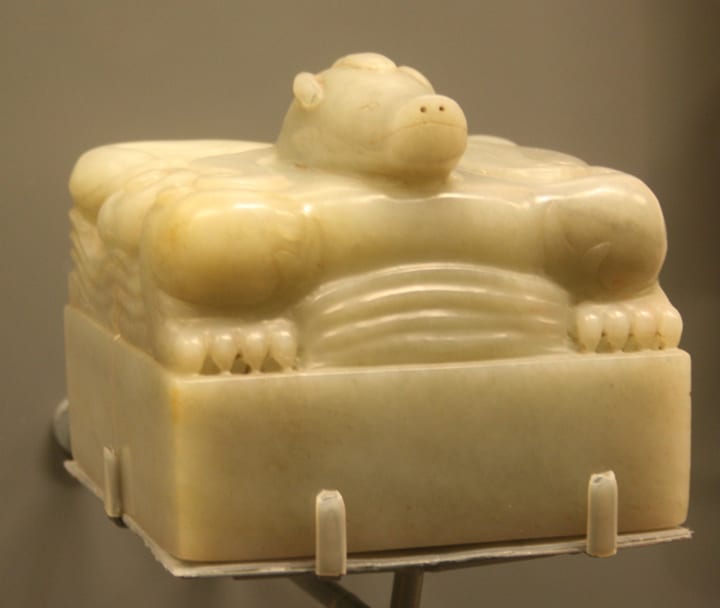
The seal is the object; its printing face touches the paper. The impression is the resulting mark. A photograph of decorated sides or a handle cannot alone reveal what the base will print.
The Hong Kong Museum of Art’s record of a seal by Qi Huang distinguishes its raised dragon decoration, side poem, and incised characters on the base. Different carving treatments can therefore occur on different parts of one object.
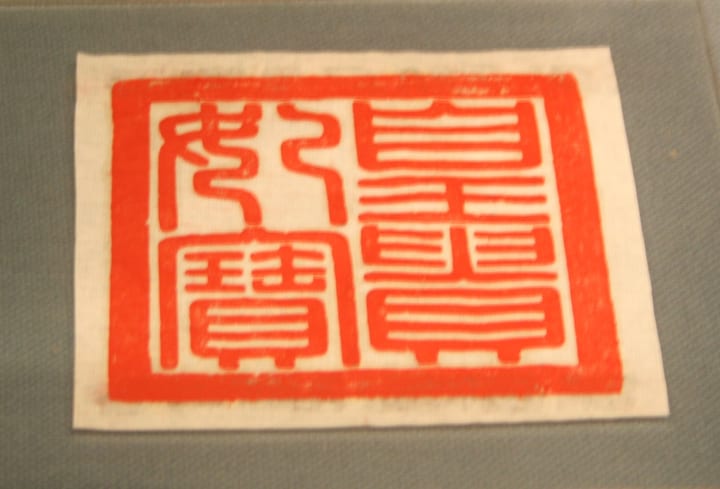
Zhuwen: raised character strokes print red
In a zhuwen, or red-character, design, the character strokes remain raised on the printing face while the surrounding background is lowered. With red paste applied to that face, the raised strokes contact the paper and leave red lines. The lowered background does not print in the same way.
The Taipei seal-carving account calls this relief carving: the strokes stand above the lowered background on the seal face. Their colored paper impression need not be a raised sculptural image.
Baiwen: recessed characters leave the paper visible
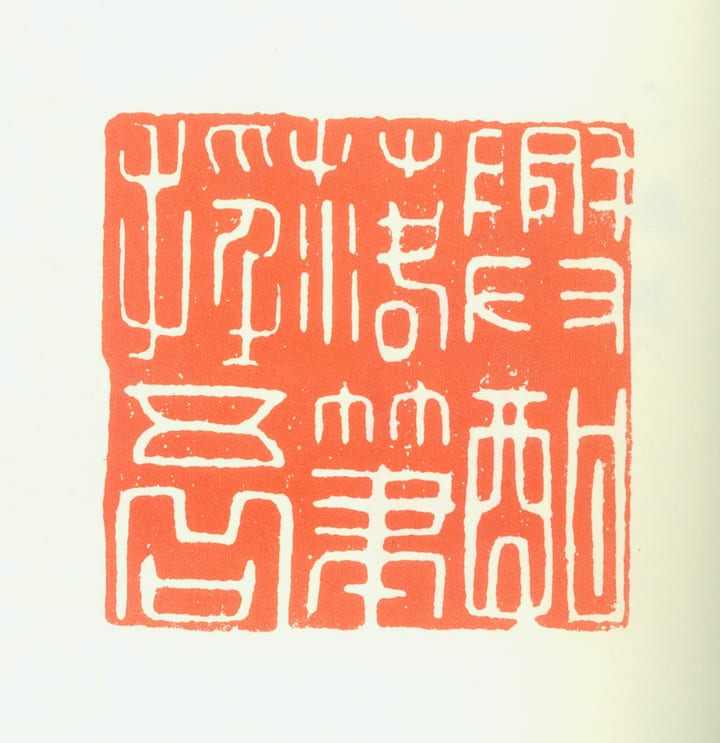
In a baiwen, or white-character, design, the character strokes are cut into the face. The surrounding surface takes paste and prints a red field, while the recessed character shapes remain unprinted. Their apparent white is the light paper showing through, not a separate application of white pigment.
An intaglio seal has recessed characters. Here that describes the object; it does not mean red pigment is deliberately printed from those grooves. Always identify which surface a description concerns.
These descriptions have a defined scope
HKUST Library’s exhibition explains the red-character and white-character results and also notes seals combining both. The National Palace Museum provides a concrete example: its bronze seal inscribed Dan Shen zhi yin has two characters described as zhuwen and two as baiwen.
Red and white are useful names in the customary setting of red paste on pale paper. They should not be treated as universal descriptions of every sealing material, color, or impression technique. A mixed design also resists a simple rule that every entire seal must belong to only one category.
Read the printed structure before interpreting the inscription
First locate the character shapes, then decide whether they are colored strokes or openings in a colored field. Look separately at borders, spaces between characters, and the balance of dense and open areas. The Taipei account emphasizes these compositional decisions in appreciating a seal.
Consult the collection record for the text and role. The Asian Art Museum places seals and paste among painting and calligraphy tools. Color and carving type alone cannot identify an owner or authenticate the artwork.
From a drawing to a reversed printing face
UNESCO’s account of Chinese seal engraving describes a design sketched on paper and cut in reverse into stone. Reversal belongs to the transfer process: the stamp face and the resulting impression face opposite ways.
The engraver must plan both the characters and the spaces left around them. A proof impression makes the result visible on paper. Compare that result with the intended design, rather than judging only the attractive stone or its decorative handle.
Photographs, credits and reading boundaries
Red-character (zhuwen) seal impression displayed at the Capital Museum, Beijing. Photo: Gary Todd, CC0; cropped and resized. This shows the printed mark, not the carved seal face. Cropped and resized/JPEG optimized. Source and license links are below. No photographer or museum endorsement is implied.
Jade seal body at the Capital Museum, Beijing. Photo: Gary Todd, CC0; cropped and resized. The underside and carved printing face are not visible in this view. Cropped and resized/JPEG optimized. Source and license links are below. No photographer or museum endorsement is implied.
Historic white-character (baiwen) impression, catalogued as 興酣落筆搖五岳. Shanghai Library digital reproduction; public domain (PD-Art/PD-old-100). Resized. The image shows an impression, not a carved matrix. Resized/JPEG optimized; original color and character shapes retained. Source and license links are below. No photographer or museum endorsement is implied.