Tea oxidation vs fermentation: the main distinction
In black-tea manufacture, polyphenol oxidase helps transform leaf catechins into compounds including theaflavins, which contribute to colour and taste. A 2024 Wuyi black-tea study followed enzyme activities and compounds through withering, rolling, fermentation, and drying. Rolling and the subsequent oxidation stage were especially important in that study.
The name fermentation has a long history in tea science. A 1943 paper from the Tea Research Institute of Ceylon used it in its title while investigating the oxidizing enzyme in tea leaves. Calling this stage oxidation explains its mechanism more clearly; calling it fermentation reflects established processing language. It does not automatically imply a microbial process.
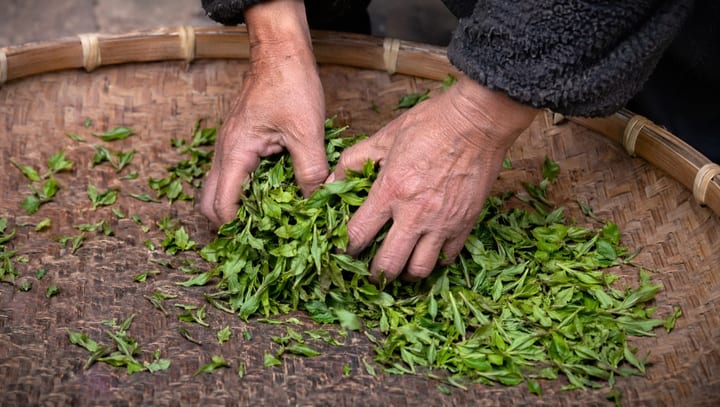
What changes in the workshop?
The China Intangible Cultural Heritage Museum describes Qimen black tea's initial processing as withering, rolling, fermentation, and drying, followed by a refining sequence that includes screening and sorting. The final product depends on more than one named reaction or waiting period.
Primary dark-tea processing follows a different route. Research in Yiyang, Hunan, examined leaves after fixing and rolling, during pile fermentation, and before drying. Fixing uses heat to inactivate important leaf enzymes. During the pile stage, microbial communities and enzyme activities changed together. The researchers associated renewed enzyme activity with microbial growth. This is a biological transformation of prepared leaves, rather than simply extending black-tea oxidation.
Black tea and dark tea are different names
English black tea corresponds to hongcha (红茶), literally red tea. Dark tea corresponds to heicha (黑茶). Shanghai's official bilingual tea introduction distinguishes these terms. Translating heicha as black tea without explanation can therefore hide a processing distinction.
A label such as fully fermented needs context. In a black-tea description it can refer to the conventional oxidation stage. In a dark-tea description, fermentation can involve microbial metabolism and enzymes. Oxidative reactions can also occur within microbial tea processing, so oxidation and fermentation are not mutually exclusive boxes.
What varies between products and studies?
The distinction describes central mechanisms, not a claim that black tea contains no microorganisms. A 2022 study of Indonesian black-tea manufacture measured bacterial communities and phenolic compounds, suggesting possible bacterial contributions. Its correlations and predicted functions do not establish one universal microbial recipe for every black tea.
Dark tea is also a family of practices. A study of Fuzhuan brick teas from Hunan and Shaanxi distinguishes initial processing from later steaming, pressing, fungal fermentation, and drying. Its sequence should not be assigned to every dark tea. Identify the tea and the production stage before comparing methods.
Why the craft context matters
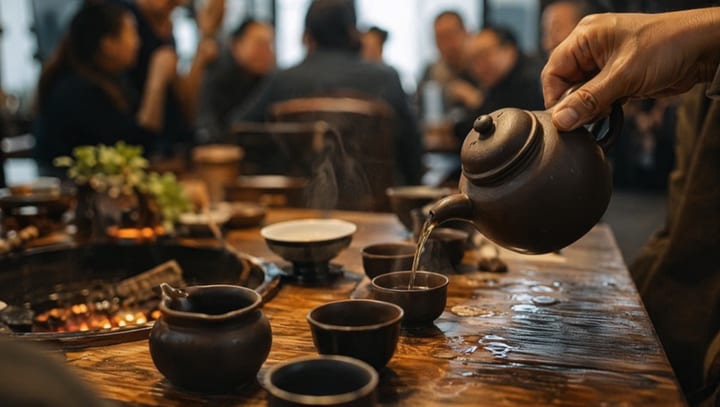
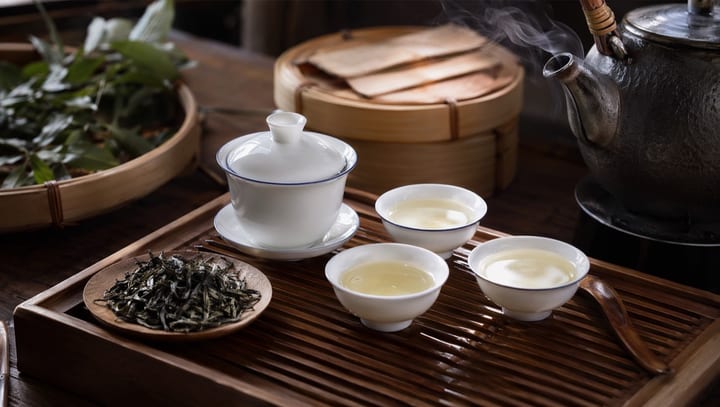
UNESCO's Chinese tea element includes plantation management, picking, manual processing, drinking, and sharing. It recognizes six tea categories developed in relation to local conditions and customs. Scientific terms explain reactions; regional teaching explains how makers judge and coordinate the work. Both help readers understand tea as a living practice.
Our imagery is a project-created explanation, not a photograph of an authenticated tea workshop or evidence of a particular batch's chemistry.