Compare two surviving museum trumpets
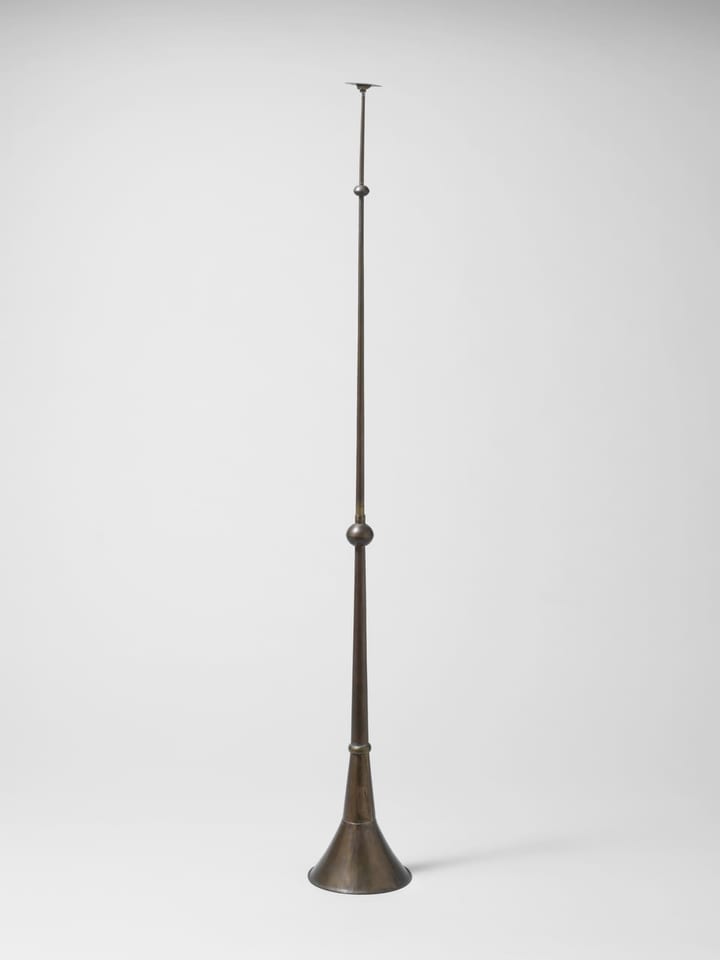
The Met records the pictured nineteenth-century Lapa, accession 89.4.22, at 94 centimetres high with a bell 12.7 centimetres across. The photograph shows several changes in the outline along the stem. Check the other catalogue view for a different angle on the same instrument.
The same museum records a late nineteenth-century brass Lapa under a different number, 89.4.2338. Its overall length is 143 centimetres. Put the measured heights side by side when comparing the two objects. A single figure for length would hide the difference between these collection records.
The University of Edinburgh’s instrument list calls its own example a laba trumpet and dates it tentatively to before 1872. Look for both spellings when searching catalogues. The list preserves a place and approximate date, while the two Met records provide the dimensions for the comparison above.
Recognize the trumpet in an illustrated scene
The Beijing Municipal Cultural Heritage Bureau identifies a soldier blowing a changjian on the east wall of Yongning’s Fire God Temple in Yanqing. In the west wall’s victory scene, the account identifies two mounted changjian players ahead of an ensemble that includes suona and percussion. The local description lists laba among several names for the long horn.
Follow the placement of the long horns and the remaining players in the account before comparing individual objects. A painting can show a musician’s posture or place in a procession. Measurements and surviving mouthpieces answer a different set of questions.
Read the order of trumpet, gong and drum
Carter’s study examines Joseph-Marie Amiot’s 1772 publication on Chinese military practice. In one exercise a single trumpet cue precedes a gong beat and continued drumming. The soldiers change formation. A second example uses two trumpet sounds and two gong beats before the drum, with another change of formation. The sequence and count are as useful to the reader as the instrument name.
A Qing procession used several horn forms
A Palace Museum study of a handscroll for Empress Dowager Chongqing’s sixtieth birthday identifies twelve players in the leading band. It describes four large copper horns, four small copper horns and four wood-bodied horns with metal ends, based on the painting and Qing court regulations. These labels locate the instruments within one documented procession.
The mouth of the museum trumpet and the groups in the painting answer different questions. Start with the record suited to what you want to identify, then look for the name used in the other source.
Images and credits
Lapa trumpet, China, Qing dynasty, nineteenth century. Metal. The Metropolitan Museum of Art, 89.4.22, The Crosby Brown Collection of Musical Instruments, 1889. Public domain, CC0. Complete photograph resized for display.