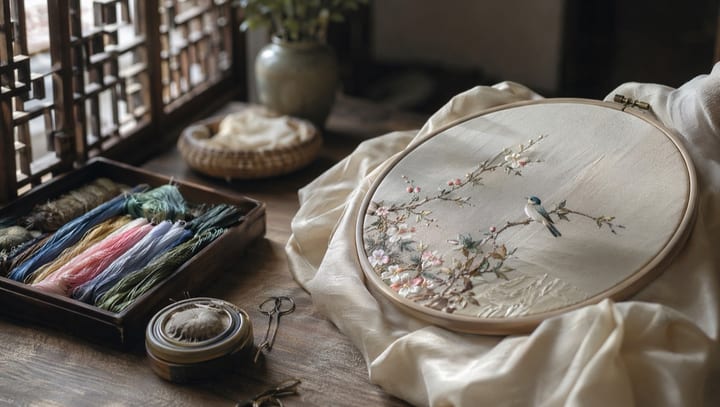
Illustrative embroidery workspace with a floral hoop, silk threads, and scissors

Chinese embroidery comparison | 蜀绣与苏绣

Shu vs Su Embroidery

The main difference in Shu vs Su embroidery is regional identity: Shu (蜀绣) is associated with Sichuan, while Su (苏绣) takes its name from Suzhou. These are distinct embroidery traditions despite their similar English names. Comparing their geography and approaches to stitching is more useful than judging them by a flower motif or a photograph alone.

Shu vs Su embroidery: start with the names

Shu and Su are easy to confuse in English. The Chinese characters make the distinction clear: 蜀 points to the Sichuan tradition, while 苏 refers to Suzhou. The official national heritage records identify Chengdu for Shu embroidery and Suzhou for Su embroidery. A separate Shu record documents the Chongqing branch.

Neither name is a synonym for all Chinese silk embroidery. When a label says only “Chinese embroidery,” ask which regional practice and maker it refers to. A place name is a starting point for learning about an object, rather than proof of its quality.

Shu embroidery: varied stitches and a composed surface

The Chengdu heritage record describes Shu embroidery as a tradition with a broad repertoire of needle techniques. It emphasizes careful thread arrangement, a smooth surface, clear color, and subjects including flowers, birds, insects, fish, and landscapes. These are tendencies described in the record, rather than a checklist that every work must follow.

The Chongqing record expands that picture: it includes single-sided and double-sided work, alongside subjects such as theatrical imagery and city architecture. Shu embroidery therefore cannot be reduced to one motif or one town.

Su embroidery: several approaches within one tradition

The Suzhou heritage record distinguishes fine traditional embroidery, realistic embroidery, and random-stitch embroidery. It describes a practice shaped by painting and by successive generations of makers developing its techniques. Su embroidery is consequently more varied than the single phrase “fine silk stitching” suggests.

Read a work at two distances. From farther away, notice the whole image and its composition. Up close, examine how the thread directions and color changes build its forms. This is a way to appreciate craftsmanship; it does not establish a regional attribution.

Shared materials do not erase regional differences

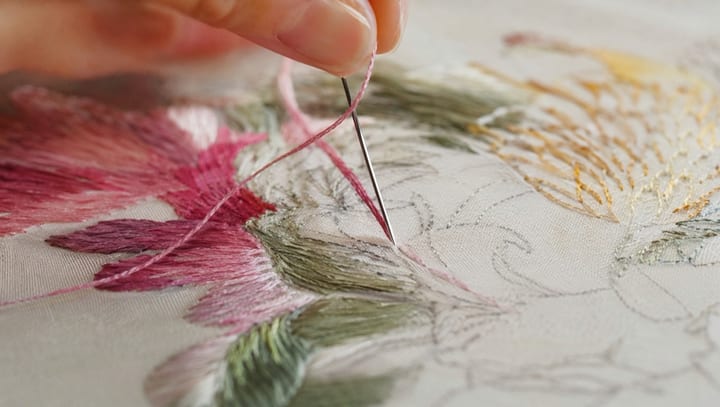
A needle, thread, fabric, and a frame appear in many embroidery settings. Their presence alone does not identify Shu or Su embroidery. The illustrations on this page show a project-created textile workspace and needlework details; they are illustrative, not authenticated examples by a named practitioner.

For a museum object or a contemporary piece, look for information about the maker, place, materials, technique, and date. If those details are missing, describe what is visible and leave the attribution open. A floral design alone is insufficient evidence.

Two national heritage records, two regional identities

The official records list both the Chengdu Shu tradition and Suzhou Su tradition in China’s first national heritage list of 2006. The Chongqing Shu entry is an extension recorded in 2008. These national records should not be presented as separate UNESCO inscriptions.

For a fuller introduction to either tradition, continue to our Shu embroidery and Suzhou embroidery guides below. The official records also let readers check the Chinese names and regional scope directly.
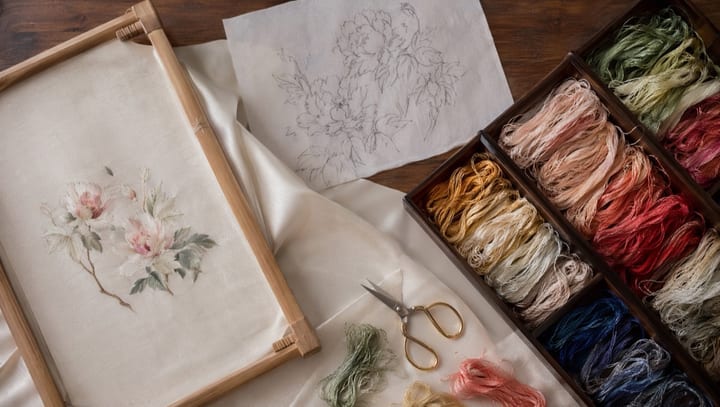
Illustrative embroidery preparation with a frame, floral drawing, and colored silk threads

Shu vs Su Embroidery in practice

Regional names help readers connect a textile with the people and places that sustain its craft. Looking closely at the work should lead to questions about its maker and practice, rather than a ranking of one tradition above another.

Illustrative needlework detail showing colored thread laid across a floral design

Shu vs Su Embroidery in practice

Regional names help readers connect a textile with the people and places that sustain its craft. Looking closely at the work should lead to questions about its maker and practice, rather than a ranking of one tradition above another.

How Shu vs Su Embroidery is practiced

  1. Prepare the textile and designChoose the fabric, thread colors, and a planned image. The Chengdu Shu record specifically describes satin and embroidery thread as materials.
  2. Set up the needleworkHold the ground fabric taut in a frame or hoop and prepare the needle and thread for controlled stitching.
  3. Build the image with stitchesWork through the design with the chosen needle techniques. Direction, spacing, and changes of color help the thread describe a form; the approach varies with the practitioner and tradition.
  4. Review and finishInspect the stitched surface and complete the work for its intended form. These are broad stages of needlework, not a substitute for training in either regional tradition.

Place, craft, and cultural meaning

Regional names help readers connect a textile with the people and places that sustain its craft. Looking closely at the work should lead to questions about its maker and practice, rather than a ranking of one tradition above another.

Chinese Name蜀绣与苏绣
Region or OriginShu: Sichuan, especially Chengdu, with a documented Chongqing tradition. Su: Suzhou in Jiangsu.
CategoryChinese embroidery comparison
MaterialsSilk thread and textile grounds; the Chengdu Shu record specifically describes locally woven satin and embroidery thread.
ToolsNeedles, a frame or hoop, scissors, and a design to guide the needlework.
UsesDecorative textiles, display works, and objects carrying floral, animal, landscape, or other pictorial designs.

Common questions

Are Shu embroidery and Su embroidery the same?
They are distinct regional traditions. The Chinese names are 蜀绣 and 苏绣, respectively.

Can a flower or bird motif identify the tradition?
A motif alone is insufficient. Ask for the maker, place, and technique documented for the particular work.

Does double-sided work always mean Su embroidery?
No. The official Chongqing Shu embroidery record also describes double-sided work.

Sources and further reading