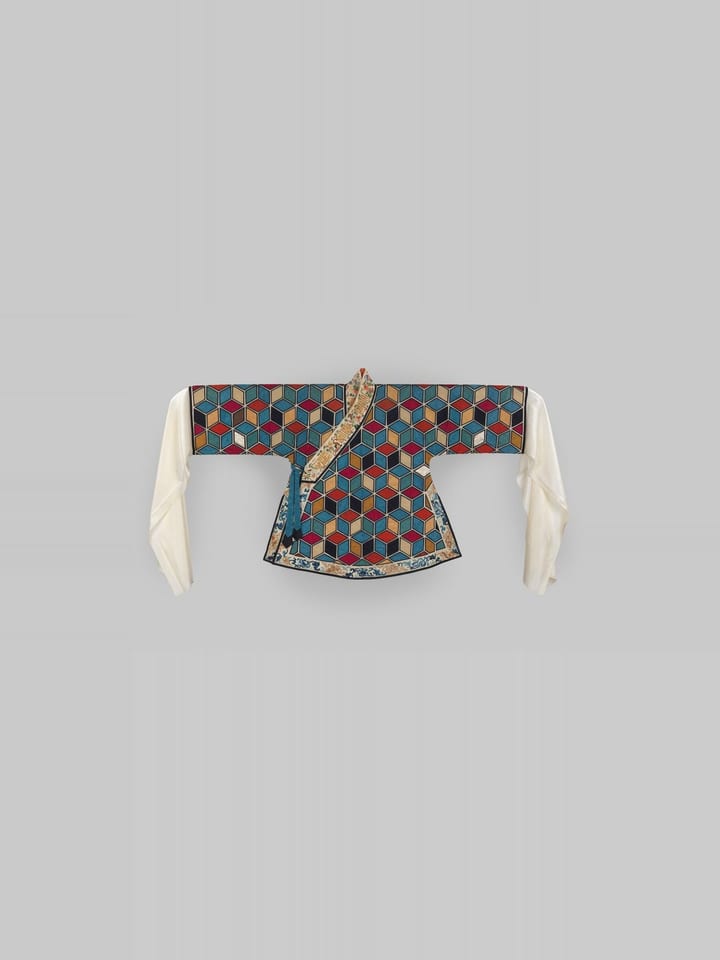
Find the extension where the patterned sleeve ends
The Metropolitan Museum of Art’s nineteenth-century jacket, 62.27.2, retains the sleeve extensions on both sides. In its photograph, each length of white fabric hangs from the end of a patterned sleeve. The museum lists silk damask appliqué, silk embroidery on satin and plain-weave silk. The changes in colour and texture show where the decorated garment gives way to the cloth that moves.
The Met identifies clothing for a young female role. Its recorded width of 289.6 centimetres is for the whole jacket. The museum leaves the role subtype and production unspecified.
Follow the hands before following the silk
The National Peking Opera Company describes a greeting in which a bowed performer uses one hand to draw the other sleeve across. It also describes brushing the cheek with a sleeve to suggest tears. The cloth makes each small action easier to see. Start by noticing which hand initiates it, then where the fabric comes to rest.
In a lesson with Beijing Opera Theatre performer Zhang Huifang, the National Centre for the Performing Arts introduces the qingyi, a female-role specialty. It records how Cheng Yanqiu distilled his sleeve work into ten movement terms, including hooking, flicking and shaking. That vocabulary names actions a performer can train. The scene gives each action its emotional weight.
Two scenes show how sleeve movement serves the story
The National Peking Opera Company describes Hu Shi searching for her missing child. The performer changes the shape and movement of the sleeves as the character moves from alarm to despair. Watch for how a sequence develops across the scene. A single pose tells less than the shift from one pose to the next.
In Zheng Yan’s recollection of Li Shaochun in Da Jin Zhuan (打金砖), the actor playing Liu Xiu combined sleeve movement and footwork with his singing in the ancestral-temple scene. The sleeve belongs to a male character here. Pay attention to when the body moves within the sung passage and when the voice holds the focus.
Practise with the cloth the performer will move
Costume researcher Alexandra Bonds describes performers practising in garments that already have water sleeves. At rest, the fabric can fold back at the wrist. Rehearsal allows actors to work with those folds and with how far it travels once released.
The National Academy of Chinese Theatre Arts’ 2023 entry assessment offered a combined sleeve-and-fan routine among the Peking opera movement options for both male and female applicants. Its teaching museum also places sleeve work within dance-acting, alongside steps and hand gestures. That combination helps explain why the movement of the whole performer is worth watching.
Images and credits
Woman’s Theatrical Jacket with intact water sleeves, Qing China, nineteenth century. The Metropolitan Museum of Art, 62.27.2, Gift of Alan Priest, 1962. Public domain, CC0. Full photograph resized with added space around it for display.