Count the boards and look for the tie
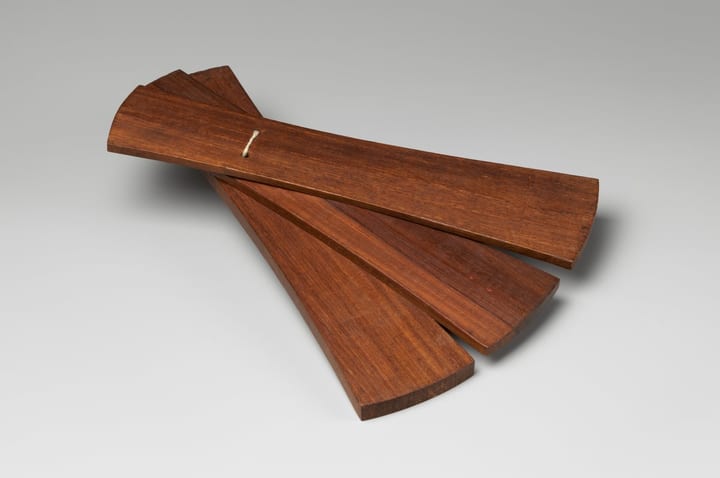
The Metropolitan Museum of Art dates the photographed set to the late nineteenth century. It is 26.1 centimetres long. Three pieces are spread out so you can see their curved ends, the holes and the connecting cord.
The Getty vocabulary describes a paiban made from six pieces tied at one end. A board count can help identify a specific example. Check that the catalogue and photograph show the same object, then look for how the parts are joined.
How the hand brings the wood together
The Chinese Music Archive describes a three-board version with two boards bound together and a third connected to them by a separate tie. In that setup, the left hand holds the single board, with the thumb near the join. A small wrist motion brings the lower ends into contact.
For another wooden sound, Yang Mu describes a round, fish-shaped block that receives a blow from a stick. Watch the point of impact when you compare a clapper with a wooden fish.
Follow the singer in Quanzhou
The national heritage record gives a seating plan for Quanzhou nanyin. The plucked pipa and sanxian sit on one side and the flute and erxian fiddle on the other. In a video with a clear view of the ensemble, locate the central singer before trying to match a sharp sound to a movement. The same record distinguishes sung pieces from named instrumental suites, so choose a vocal example for this comparison.
Cloris Lim’s fieldwork shows a five-board Minnan set and describes a vocalist using the clappers on strong beats. Her study also reproduces an older example of song words with little circles next to the text to mark clapper strokes. She reports that this particular kind of score is out of use.
Macao’s Cantonese nanyin has its own history
The Macao heritage record describes singers who once provided their own accompaniment with instruments such as the yehu fiddle or sanxian lute. Later duets and shorter pieces brought in more instruments, among them the yangqin, dongxiao and paiban. When looking up a recording by the name nanyin, check the place and language given in the programme.
Images and credits
Paiban, China, late nineteenth century. Hardwood. The Metropolitan Museum of Art, 89.4.1395, The Crosby Brown Collection of Musical Instruments, 1889. Public domain, CC0. Complete photograph resized for display.