How to Read Chinese Archers’ Thumb Rings
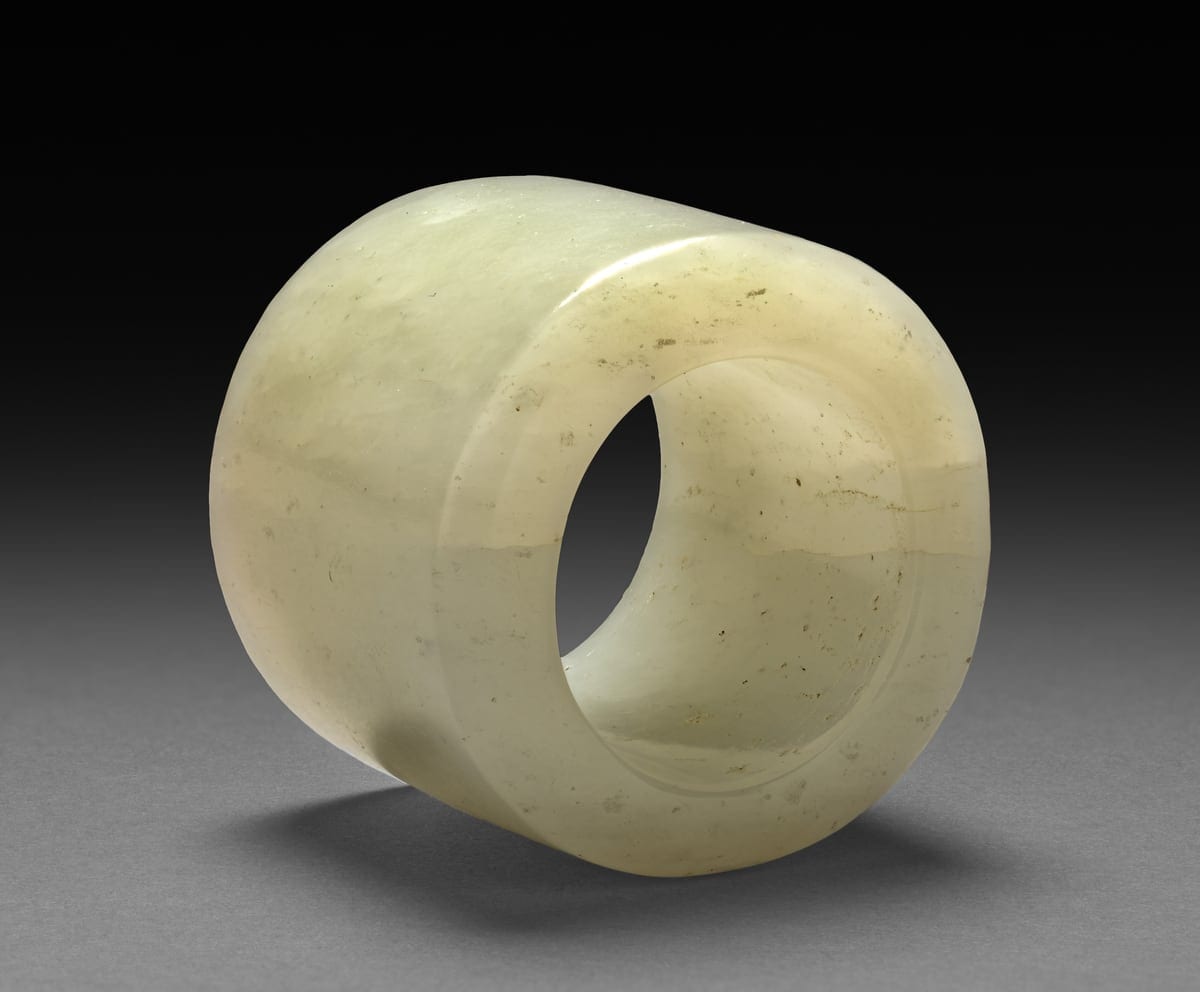
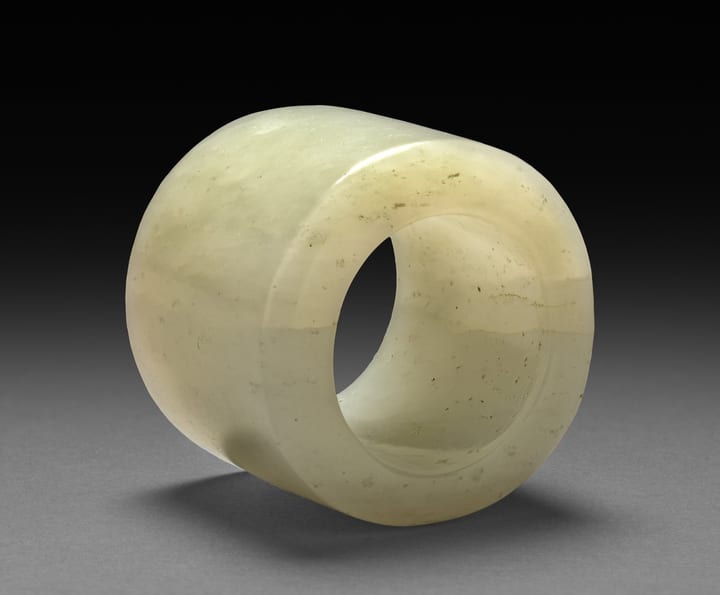
The photographed Cleveland ring is dated to the Qianlong reign, 1736–1795. Its catalogue gives a diameter of 3.3 centimeters and an overall measurement of 2.6 centimeters. The angled view reveals the wide body around the opening. Follow the uninterrupted outer surface and the rounded edges where it turns into the bore.
The Palace Museum describes a Qing ring, 故00009953, as a smooth cylinder with level ends and a plain exterior. It measures 3.2 centimeters across and 2.5 centimeters high. Those words identify a specific profile. When comparing two rings, check the side view as well as the circular outline seen from above.
A projecting part or a squared side changes the profile
The Musée de l’Archerie et du Valois introduces Chinese thumb rings through a group of seventeenth- to nineteenth-century metal and stone objects. Its account distinguishes simple cylinders from forms with a projection extending over the fingertip. The projection is a feature to locate in the shape of the ring, alongside its opening and wall.
Corning’s transparent brown glass ring, 51.6.159, has another documented variation. The museum describes a tubular body squared on one side, a flat upper rim and a rounded lower rim that slopes upward. It dates the object to about 1850–1941. The squared area gives a viewer a reference point when comparing the two ends. Corning proposes cutting it from a tube, grinding and tooling.
Glass can be shaped before its final polish
A second Corning ring, 2023.6.3, is mold-blown and polished. Red, orange and brown glass form a tapered cylinder with one convex end and one concave end. The catalogue attributes it to the imperial workshops, probably in Beijing, and dates it probably to 1736–1795. Look at the taper and both ends before concentrating on the changing colors.
Archery and adornment give the form different settings
The Met describes plain bone or antler rings in the context of Manchu hunting and military life. It also discusses decorated rings in jade, amber and ivory as personal adornment. This distinction helps explain why the category includes both modest materials and elaborate finishes.
Corning connects Qianlong’s ornamental glass rings with his Manchu ancestry. Cleveland notes that thumb rings were fashionable among civil officials in the late Qing.
Images and credits
Thumb Ring, China, Qing dynasty, Qianlong reign, 1736–1795. White jade. Cleveland Museum of Art, 1970.141. Gift of Mrs. John Lyon Collyer in memory of her mother, Mrs. G. M. G. Forman. CC0. Complete museum photograph, resized.